
Are We Alone? The Thrilling Quest to Find Life Among the Stars
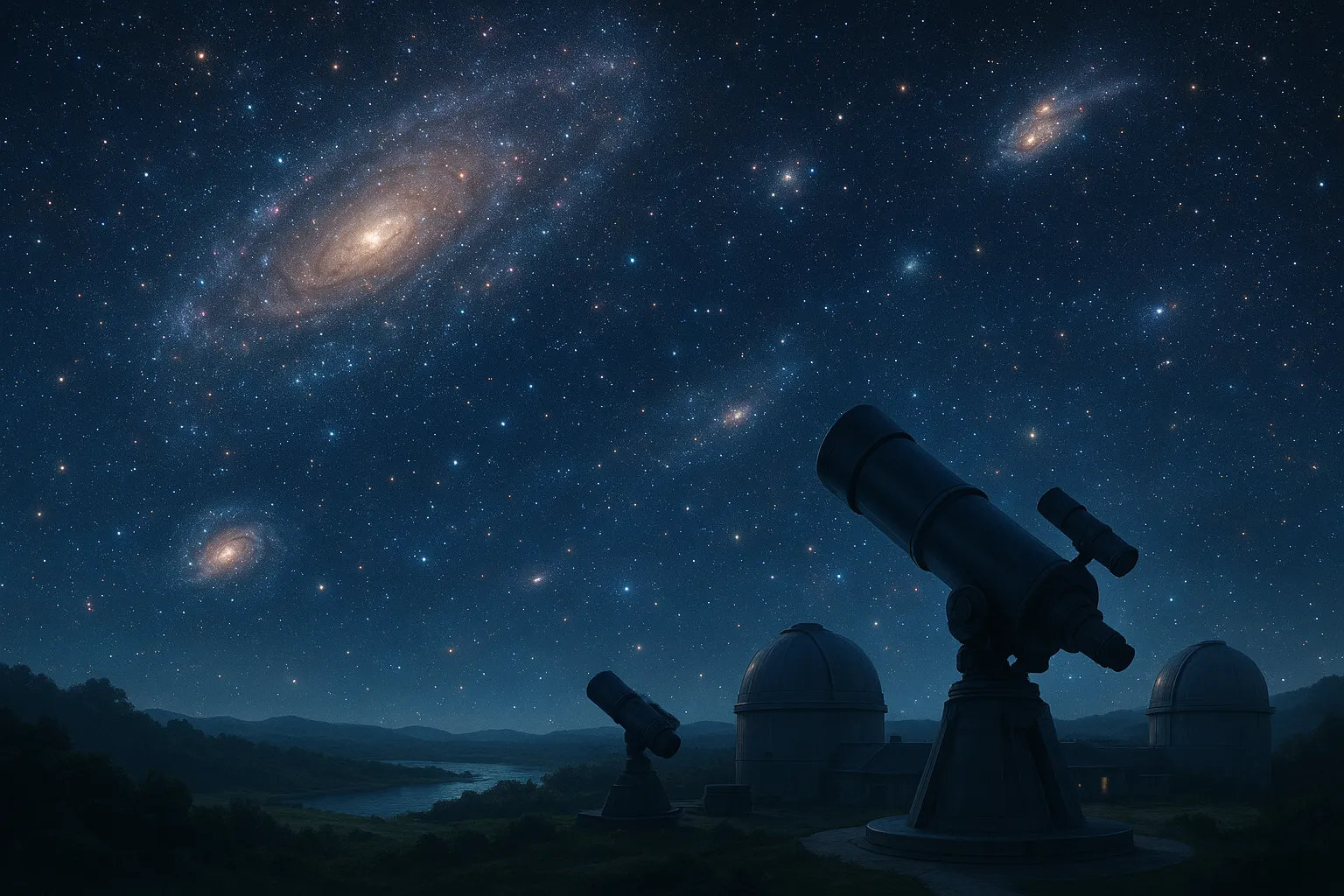
The age-old question of whether we are alone in the universe is not just the stuff of science fiction; it is a matter of ongoing scientific inquiry. As we gaze at the countless stars dotting the night sky, we can't help but wonder if some of those distant lights might harbor alien worlds teeming with life. From the first telescopes to the latest space-faring missions, our pursuit of extraterrestrial life has evolved remarkably, blending astronomy, biology, and technology into one thrilling adventure.
The Expanding Universe: More Than Meets the Eye
In the vast expanse of the cosmos, there are more than 100 billion galaxies, each containing millions or even billions of stars. Recent discoveries suggest that many of these stars are accompanied by planets—some of which may be in the "Goldilocks zone," that perfect distance from a star where conditions might allow liquid water to exist. Water, as we know, is essential for life as we understand it. This raises the question: if these planets exist, are they capable of supporting life?
The Tools of Discovery: How We Search for Alien Life
Our quest for extraterrestrial life utilizes sophisticated tools ranging from ground-based telescopes to the advanced space telescopes like Hubble and James Webb. Scientists employ methods such as spectroscopy, which analyzes the light from distant stars and planets to detect chemical signatures of life, such as oxygen or methane. These techniques allow researchers to gather clues that lead them closer to answering the question: Is anyone else out there?
Challenges on the Path: Signals and Silence
One of the most well-known initiatives in the search for extraterrestrial intelligence is the SETI (Search for Extraterrestrial Intelligence) program. It involves scanning the cosmos for signals, such as radio waves, that might indicate intelligent life. However, despite decades of searching, no definitive signals have been detected, leading some to propose the Fermi Paradox: If intelligent life is common, why haven't we found any? The silence of the cosmos presents a daunting challenge for scientists and piques the curiosity of the public.
Life in Extreme Places: Reconsidering Our Definitions
As we explore environments on Earth that were previously deemed inhospitable—like deep-ocean vents and acidic lakes—we've uncovered life forms that challenge our understanding of biology. This realization leads to the exciting possibility that life may exist on other planets in forms we cannot yet comprehend. For instance, the icy moons of Jupiter and Saturn, such as Europa and Enceladus, may harbor subsurface oceans, beckoning scientists to investigate whether life could thrive beneath their frozen surfaces.
Conclusion: The Future Awaits
The search for extraterrestrial life is more than a scientific endeavor; it is a reflection of our own existence and humanity's place in the universe. As we continue to develop new technologies and missions, including Mars exploration and the study of exoplanets, the dream of discovering life beyond Earth remains alive. Whether we find microbial organisms or civilizations far advanced from our own, each discovery has the potential to reshape our understanding of life itself. For now, the stars whisper their secrets, and we are determined to listen.


