Paradoxes: The Mind-Bending Puzzles That Challenge Your Reality
Have you ever found yourself in a situation that, at first glance, defies logic? Paradoxes are those intriguing puzzles that seem to challenge the very fabric of logic and reasoning, often leaving us scratching our heads. These statements or situations can be mind-boggling, prompting not just confusion but also inspiration for deeper thought. In this article, we'll delve into some captivating paradoxes that can shift our perspective and explore why they are crucial for understanding complexities in everyday life.
What Is a Paradox?
A paradox is essentially a statement that appears self-contradictory or illogical, yet upon closer examination, it may reveal an underlying truth. Think of it as a riddle—a puzzling scenario that forces you to reconsider your understanding of a concept or situation. For instance, if I say, "This statement is false," you might find yourself trapped in a loop of confusion: if the statement is true, then it must be false, and vice versa. This is the essence of a paradox.
Common Examples of Paradoxes
Paradoxes come in many shapes and sizes, each offering a unique twist on our understanding. Here are a few notable examples:
- The Barber Paradox: Imagine a barber who shaves everyone who does not shave themselves. The question arises: does the barber shave himself? If he does, then according to the premise, he must not shave himself. If he doesn't, then he must shave himself. This circular reasoning highlights the complexity of self-reference.
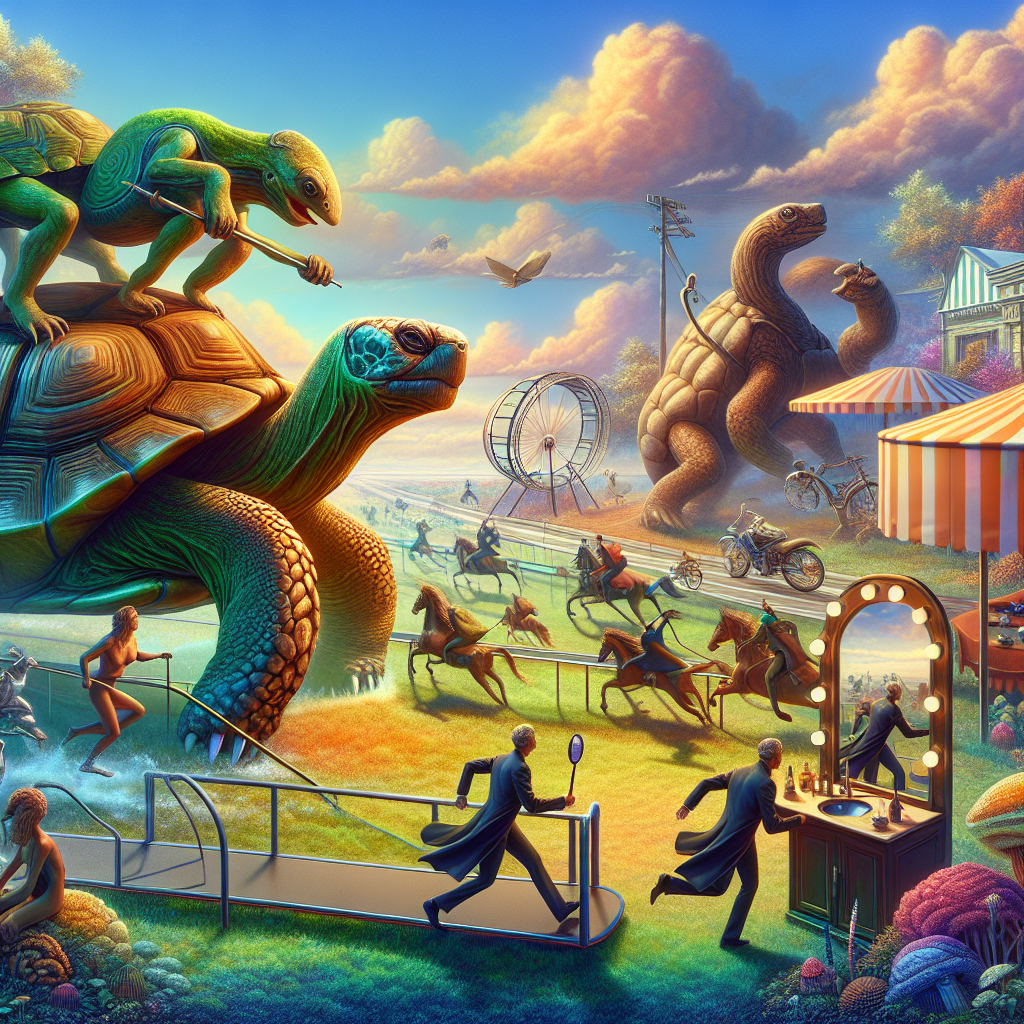
- Achilles and the Tortoise: In this classic thought experiment by Zeno, Achilles races a tortoise that has a head start. Zeno argues that Achilles can never catch the tortoise because whenever Achilles reaches the point where the tortoise was, the tortoise has moved slightly ahead. This challenges our everyday understanding of motion and distance.
Why Are Paradoxes Important?
So, why should we care about these puzzling scenarios? The beauty of paradoxes lies in their power to stimulate critical thinking and promote deeper understanding. They encourage us to question assumptions, analyze our beliefs, and explore the boundaries of logic.
In philosophical discussions, for instance, paradoxes reveal the limitations of traditional reasoning. They illustrate that reality often contains contradictions that we must learn to navigate. In science, paradoxes can lead to significant breakthroughs as they challenge established theories, pushing the frontiers of knowledge.
How Paradoxes Affect Our Daily Lives
While paradoxes might appear to belong to the realm of philosophy or advanced mathematics, their impact is felt in our everyday experiences. Consider the classic situation of decision-making: the more options we have, the harder it seems to make a choice. This paradox of choice suggests that too many options can lead to anxiety and paralysis, rather than empowerment.
Moreover, parables in human relationships often emerge as social paradoxes, such as the idea that "the more you try to control something, the less control you have over it." Understanding these complexities can lead to more effective communication and interpersonal dynamics.
Conclusion: Embracing the Complexity
Paradoxes are not merely curiosities to be pondered in isolation; they are essential tools for navigating the complexities of life. By embracing these thought-provoking puzzles, we enhance our cognitive abilities and learn to appreciate the nuances in our understanding of the world. Next time you encounter a paradox, don’t shy away from it—lean into the confusion and discover the deeper truths that lie within.

