
A Breakthrough in High-Performance Computing: Harnessing Desynchronization to Boost Performance!
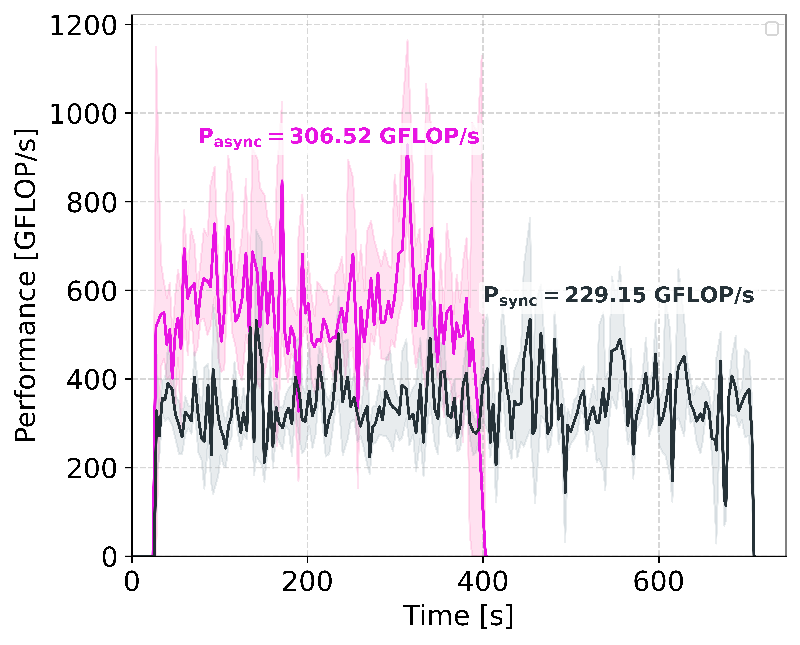
The intersection of compute-bound and memory-bound processing has long been a challenge in high-performance computing (HPC). A recent study led by Ayesha Afzal and her team at the Erlangen National High Performance Computing Center reveals insight into how enabling desynchronization can unintentionally enhance application performance. This innovative approach marks a significant shift in understanding the interaction between different computational phases in parallel applications.
Understanding Desynchronization in Parallel Applications
Traditionally, parallel applications have been designed for synchronous execution, meaning that all processes perform operations simultaneously. This synchronization, however, can lead to communication stalls, which are often viewed as performance bottlenecks. The key finding of this research is that, in certain applications with minimal inter-process communication, these stalls can actually relieve pressure on memory bandwidth, thus increasing overall throughput. This insight challenges conventional wisdom in designing high-performance computing applications.
The Parallel Optical Flow Solver: A Case Study
The researchers demonstrated their theory using the Parallel Optical Flow Solver, which combines a compute-intensive ray tracing kernel with a memory-intensive optical flow kernel. Through experiments, they found that allowing processes to run out of sync led to less contention for memory bandwidth, ultimately enhancing performance. This desynchronization can offer significant speedups, particularly when the number of processes in the memory-bound phase is close to the memory bandwidth saturation point.
Performance Gains: A Paradigm Shift
The study quantified performance gains from naturally occurring desynchronization, with the Parallel Optical Flow Solver achieving a remarkable 25.5% improvement over a baseline synchronous execution. Notably, when tuned to balance workloads, performance improvements peaked at 46%. This indicates that applications can be optimized not just by focusing on reducing synchronization, but by strategically allowing some level of desynchronization.
Implications for Future Research
This study opens several pathways for future research in HPC. The authors suggest that their findings could be generalized to other multi-kernel applications, such as those found in rendering or machine learning pipelines. Furthermore, they advocate for the development of simulation tools, like their customized DisCostiC framework, to better understand and predict the dynamics of desynchronization across various hardware and application types.
Conclusion: Rethinking HPC Strategies
As HPC continues to evolve, the work presented by Afzal and her colleagues prompts a critical reevaluation of how applications are architected for performance. Emphasizing the benefits of desynchronization could reshape practices within the industry, steering developers towards harnessing this phenomenon to optimize computational efficiency. The findings merit further exploration and could lead to significant advancements in the design and execution of parallel applications.
For those interested in delving deeper into this revolutionary work, the complete study is available in detail along with performance data and methodology.
Authors: Ayesha Afzal, Krishna Manda, Georg Hager


