
Augmented Reality vs. Mobile Interfaces: The Surprising Truth About Human-Robot Collaboration in Search-and-Rescue
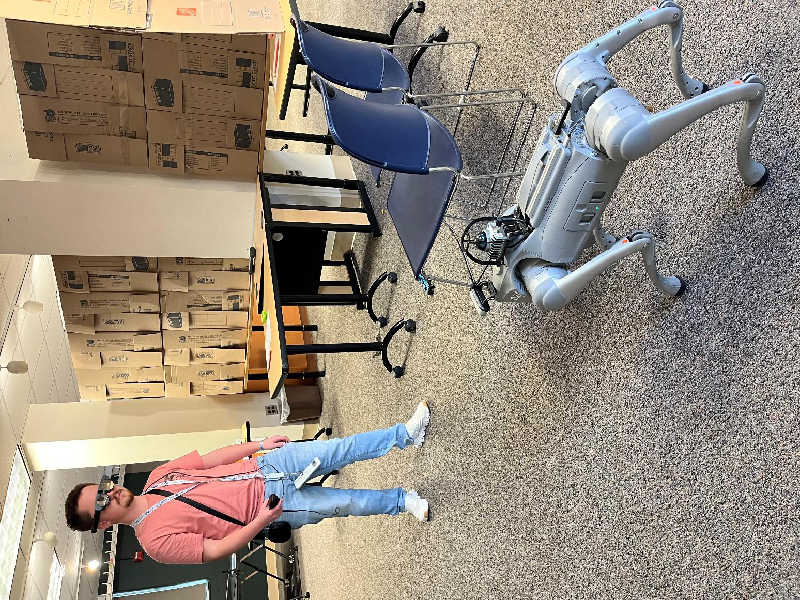
A recent study conducted by researchers at Duke University and Lancaster University explored the impact of Augmented Reality (AR) interfaces on situational awareness (SA) in human-robot collaboration (HRC). The research specifically focused on high-stakes environments like search-and-rescue (SAR) where effective coordination between humans and robots is essential.
The Challenge of Situational Awareness
Situational awareness refers to an individual's ability to perceive environmental elements, understand their significance, and anticipate future states. In dynamic settings such as SAR, maintaining SA while working alongside robots becomes a complex challenge, especially when unexpected hazards may emerge. The researchers aimed to compare AR interfaces with standard mobile phone interfaces to see which better supported SA during a simulated SAR task.
Methodology: A Side-by-Side Comparison
The study involved 30 participants who were tasked with using either an AR interface or a mobile phone interface to complete a SAR-like task. Both interfaces presented equivalent information, including the robot's location and the route to follow. Notably, the AR interface utilized spatially conformal visuals, promising to enhance users' ability to track both the robot and their environment simultaneously.
Key Findings: AR Improves Perception but Not Higher-Level Awareness
The findings revealed that while the AR interface significantly improved perception-level robot awareness—allowing users to better track the robot's position—it did not enhance higher-level awareness related to comprehension or projection of robot actions, nor did it improve the awareness of environmental hazards. This indicates that AR's benefits are not as comprehensive as previously thought, raising questions about its design and usability in real-world applications.
Why Didn't AR Boost Environmental Awareness?
One of the intriguing aspects of the study is why AR did not enhance users' environmental awareness. Gaze analysis revealed that while the AR interface did free users from consistently looking at a mobile screen, their attention shifted to the AR visuals instead of the physical environment. This suggests that AR interfaces must find a delicate balance, providing necessary information without overwhelming users or diverting their attention from potential environmental hazards.
The Road Ahead: Recommendations for AR Design
Based on the study's insights, researchers recommend designing AR interfaces that attract less attention while still delivering crucial information. For instance, instead of constant visual cues, employing discreet indicators that appear at critical moments could help users maintain a balance between their focus on the interface and their awareness of the surrounding environment.
Conclusion: A Call for More Research
This research underscores that while AR has potential benefits for enhancing certain aspects of situational awareness in HRC, its contribution is selective rather than universal. Future studies should delve deeper into optimizing AR interfaces for real-world applications, particularly where environmental awareness is key to success. As AR technology progresses, understanding how to design effective interfaces that enhance safety and efficiency in human-robot collaboration will be crucial.
Authors: Zhehan Qu, Christian Fronk, Jaewoong Jeong, Pavel Manakhov, Maria Gorlatova




