Banking on Quantum Security: How Hybrid Cryptography is Safeguarding Financial Transactions
The race to enhance security within the banking industry has taken a significant leap forward with an innovative paper detailing a hybrid quantum-safe architecture. Authored by a team of researchers and practitioners from institutions including the Universidad Politécnica de Madrid and Cisco, this research addresses the looming threat posed by quantum computing on existing cryptographic systems.
The Quantum Threat
As quantum computing technology advances, it presents a formidable challenge to classical cryptographic systems widely used in financial sectors—particularly protocols such as RSA and Diffie-Hellman. These protocols, which safeguard countless digital transactions, are increasingly at risk of being compromised by future quantum computers capable of breaking their encryption.
In light of this impending threat, financial institutions must identify and implement "quantum-safe" communication methods to ensure the continued protection of sensitive data. The research team behind the study has introduced a framework that combines classical cryptography with emerging strategies like Quantum Key Distribution (QKD) and Post-Quantum Cryptography (PQC).
A Hybrid Solution for Secure Banking
The architecture proposed in the paper has the dual advantage of being both scalable and agile. By integrating established protocols like classical cryptography with quantum-safe technologies, this system aims to create a robust, adaptable environment for secure financial communications. The design allows for the seamless transition from classical systems to more sophisticated quantum-safe frameworks while minimizing disruptions to existing infrastructure.
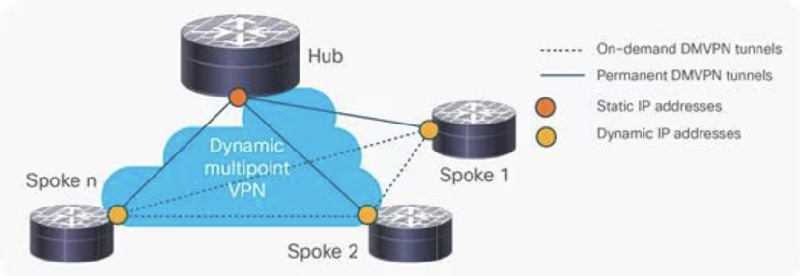
This novel approach is demonstrated through its application within a Dynamic Multipoint Virtual Private Network (DMVPN), which permits secure site-to-site communications within enterprise networks. Testing completed on a five-node network in Madrid, with additional nodes in Mexico, showcased the promise of this hybrid architecture under real operational conditions.
Technological Integration and Performance
Leveraging Software-Defined Networking (SDN) for dynamic key management, the researchers successfully integrated different cryptographic technologies in a single environment. The flexibility of including both QKD and PQC mechanisms allows institutions to select the most effective security measures for various scenarios—all while adhering to established protocol standards.
Initial tests revealed that the system not only offered enhanced security but also maintained high performance levels, crucial for the fast-paced financial sector. The study reports no significant performance decline when employing quantum-safe methods compared to traditional methods, emphasizing the potential for practical deployment.
Future Implications
This research emphasizes a strategic framework that can facilitate a secure, quantum-resilient infrastructure for banking and other critical sectors. The overarching message is clear: as quantum technology continues to evolve, integrating quantum-safe cryptography into current practices is essential for anticipating future challenges.
By validating a scalable architecture capable of incorporating quantum-resistant encryption methods, banks and financial institutions can continue to safeguard their transactions, ultimately bolstering consumer trust in a digital landscape increasingly susceptible to evolving threats.
Conclusion
The transition to quantum-safe protocols isn't just a technological upgrade; it's a necessity for maintaining the integrity of the banking system. This groundbreaking research offers a blueprint for financial institutions seeking to create secure communication networks now and for the future. As quantum computing approaches reality, taking proactive steps today can prepare banks for the challenges of tomorrow.
Authors: Rafael J. Vicente et al.

