
Breaking Barriers in Robotic Learning: A Deep Dive into Temporal Robustness of Imitation Learning
Recent research from the University of Maryland is challenging long-held assumptions about imitation learning in robots, particularly in dexterous manipulation tasks. The paper, titled “Does Imitation Learning Preserve Temporal Robustness in Dexterous Manipulation? An Expert–Learner Comparison Across Task Execution Speeds” by Clinton Enwerem, John S. Baras, and Calin Belta, investigates whether robots can maintain effective performance despite variations in the speed of task execution. This crucial study reveals significant insights into how robot learning can be optimized to work across different speeds, which is especially relevant in real-world applications where conditions change rapidly.
Understanding the Core Findings
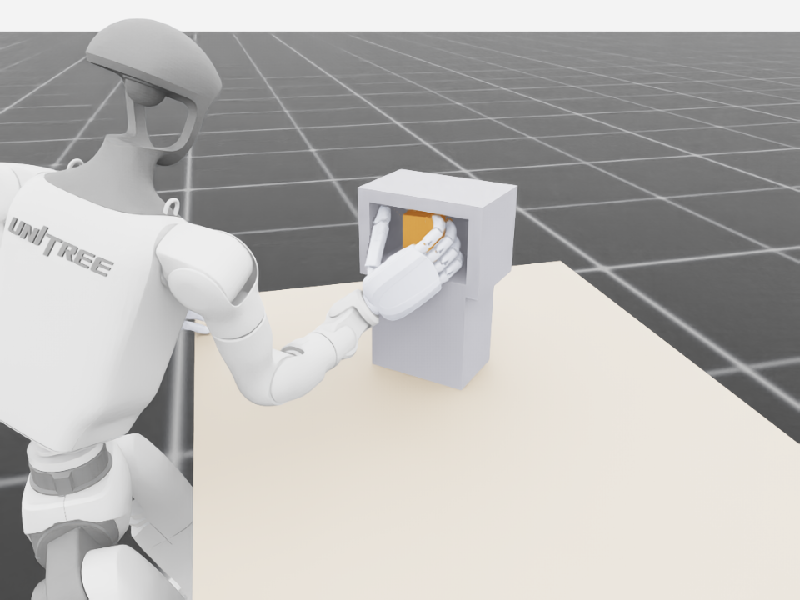
The study focused on a benchmark task called ParcelStow, where a robotic system must acquire, reorient, and insert a parcel into a designated receptacle. The researchers trained a robotic learner using an imitation learning approach, then compared its performance against a scripted expert under the same conditions but varying the execution speeds.
Interestingly, while both the expert and the learner achieved a 100% success rate at nominal speed, the learner’s performance dropped significantly at higher speeds. At a maximum tested speed, the expert maintained an impressive 84% success rate, while the learner faltered at only 53%. This marked difference raises questions about the reliability of just looking at nominal success rates to determine a robot’s effectiveness in real-world situations.
What Is Temporal Robustness?
Temporal robustness refers to a system's ability to perform well regardless of the speed at which it operates. In robotics, maintaining robust performance across various speeds is crucial because real-world actions—like grabbing or placing an object—don’t always happen at a fixed pace. For instance, a human might quickly pick up a ball but fumble if they try to do it too quickly or slowly. This study highlights that while learners can imitate expert actions effectively at nominal speed, they often struggle when those actions must be executed faster or slower, indicating they do not retain the same level of control or understanding as their expert counterparts.
Methodology and Experimental Setup
The researchers implemented the ParcelStow task by utilizing a humanoid robotic system equipped with a sophisticated hand, and conducted controlled experiments to assess how both the expert and the learner performed under identical conditions but varied execution speeds. They meticulously recorded the reasons for failures to pinpoint specific weaknesses, such as insertion misalignments that became more frequent at higher speeds.
By changing the phase durations of the task while holding other conditions constant, they created a robust framework for evaluating performance across multiple execution speeds. This methodological approach enabled a clear comparison of the expert's abilities against the learner's, providing important insights about the limitations of current imitation learning strategies.
Implications for Future Robotics and Learning Systems
The findings have critical implications for advancing robotic learning. First, they suggest that current imitation learning systems may need re-evaluation to ensure they are not just performing well in idealized conditions but can adapt to varying real-world scenarios. Future research may require focusing on training methods that incorporate speed adaptability from the outset, ensuring that robots can handle tasks effectively, regardless of how fast or slow those tasks need to be executed.
Moreover, the introduction of benchmarks like ParcelStow can standardize how we evaluate robotic task performance across speeds, encouraging further innovations in both robotic design and the training methodologies employed in the field of robotic learning. As robotics plays an increasingly pivotal role in various industries, understanding and improving temporal robustness will be essential.
This study not only advances the understanding of robotic manipulation but also serves as a cornerstone for future explorations into making robots more reliable in dynamic and unpredictable environments.




