
Breaking Boundaries: A Revolutionary Theory of Ultrasound-Induced Streaming Inside Cells
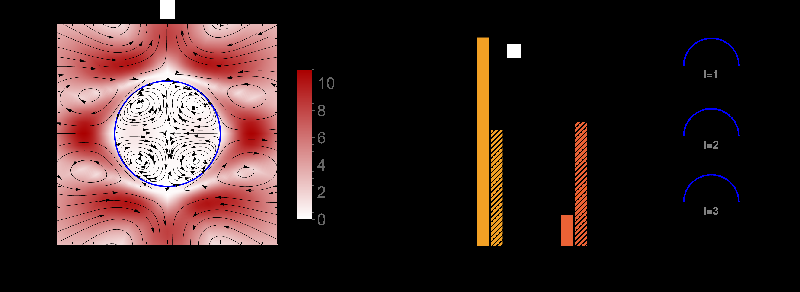
Ultrasound technology has long been a staple in medical imaging, but a recent research paper from Heidelberg University takes us a step further, suggesting profound implications for cellular manipulation and therapy. This innovative study presents a semi-analytical model to understand how ultrasound induces intracellular streaming, potentially transforming approaches to drug delivery and disease treatment.
The Power of Ultrasound
Ultrasound is not only employed for imaging but also for manipulating biological cells through various physical effects such as acoustic radiation force, heating, and streaming. The challenge has been understanding and quantifying the relative strengths of these effects when they act simultaneously. The research demonstrates that by modeling cells as viscoelastic droplets in a fluid, they can predict how ultrasound-induced waves create unique flow patterns within these cells.
A New Mathematical Framework
The authors introduce a mathematical model utilizing the Oldroyd-B fluid dynamics theory, which accounts for the viscoelastic properties of both the cells and the surrounding medium. This approach allows them to predict intricate aspects of acoustic streaming and how it can reverse its direction under various conditions. The ability to control these flow patterns is crucial for targeted drug delivery, where precise control over how and when drugs are released can dramatically improve therapeutic outcomes.
Investigating Flow Patterns
One of the significant findings of the study is the complex energy distributions associated with different flow modes when subjected to ultrasound. The researchers identified "flow reversals," where the direction of the intracellular flow can change depending on frequency and viscosity of the solutions within and around the cells. Such reversals can influence biological functions crucial for cellular signaling and response to external stimuli.
Potential Applications
This groundbreaking research paves the way for enhanced applications in sonogenetics and targeted drug therapies. By controlling intracellular streaming, researchers can potentially influence how drugs are absorbed and utilized by cells, facilitating more effective treatments with fewer side effects. Moreover, it opens up avenues for new techniques in cellular sensing and signaling as it offers a pathway to manipulate cellular processes externally using ultrasound.
Conclusion: A Step Towards the Future
In summary, the research conducted by Niels Gieseler and his colleagues represents a significant advancement in understanding how ultrasound can be utilized to manipulate cell behavior in a controlled manner. The implications of this study extend beyond theoretical pursuits and could revolutionize biomedical applications, from enhanced drug delivery systems to novel therapeutics leveraging the principles of acoustic streaming.
As the field continues to evolve, this pioneering work stands as a foundation for future explorations into the intricate physics of ultrasound and its biological applications.
Authors: Niels Gieseler, Falko Ziebert, Ulrich S. Schwarz




