
Breaking Boundaries in Noisy Optimization: The Innovative Confidence-Based Ranking Method!
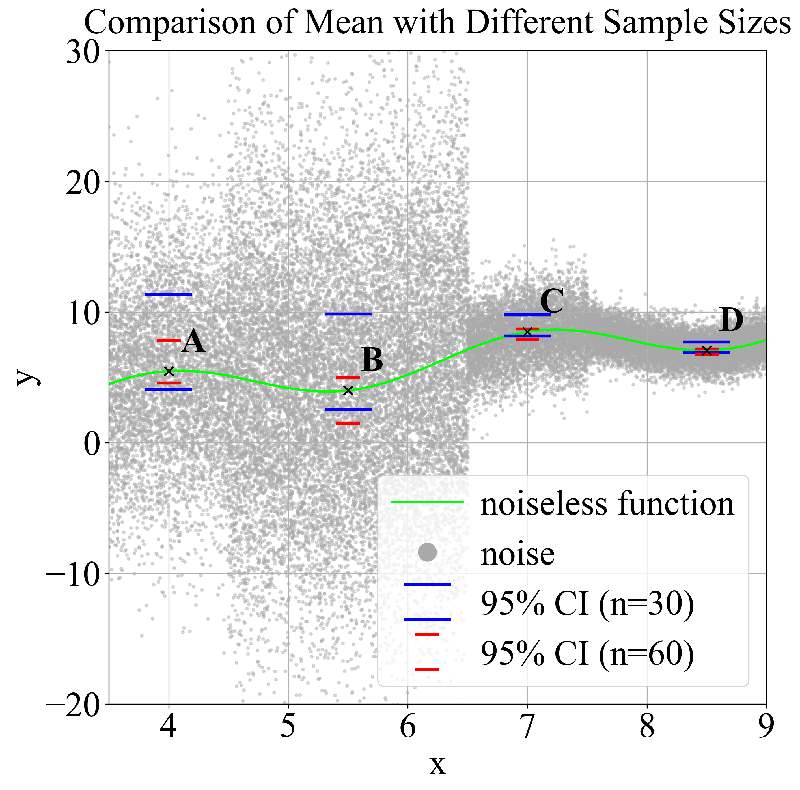
A new research paper from Enrico Halim, Hemant Kumar Singh, and Tapabrata Ray at the University of New South Wales unveils a cutting-edge approach to tackle noisy optimization problems. This groundbreaking study focuses on enhancing black-box optimization techniques by introducing a confidence-based ranking (CR) method that allocates sampling budgets adaptively. This innovation is critical as real-world optimization issues often involve uncertainty and noisy evaluations which can complicate solution identification.
Understanding Noisy Optimization Problems
Noisy optimization problems (NOPs) are prevalent in various fields, from engineering to finance. They arise when evaluations of possible solutions are not only based on the actual function to be optimized but also affected by external disturbances or errors. The solutions that yield the best performance can often be obscured by this noise, making it difficult for algorithms to identify the most promising candidates.
The CR Method: What Is It?
The CR method proposed in this research signifies a shift from traditional optimization techniques that often rely on implicit averaging or static sampling methods. Instead, it utilizes an explicit averaging strategy combined with adaptive sampling, allocating more resources to the most promising solutions while reducing waste on less effective ones. This ensures that the optimization process is computationally efficient, especially in noisy environments.
How the CR Method Works
The implementation of the CR method is elegantly structured within popular optimization frameworks like Covariance Matrix Adaptation Evolution Strategy (CMA-ES) and Genetic Algorithms (GA). It operates by following three key components:
- Initial Sampling: Each candidate is evaluated with a minimum number of samples to establish an initial ranking.
- Ranking Procedure: Using statistics, specifically Welch’s t-test, the algorithm ranks candidates based on their performance, ensuring the best candidates are prioritized.
- Resampling and Adaptation: The method dynamically adjusts the sampling size based on the observed noise, directing resources to where they are needed most.
Experimental Validation and Results
The researchers meticulously tested their proposed method across a range of benchmarks, including both unimodal and multimodal functions, under different noise conditions. The results were quite telling; algorithms employing the CR method exhibited a marked improvement over existing state-of-the-art approaches, particularly under heteroscedastic noise conditions, where the noise level varied across different areas of the search space.
Practical Applications Beyond Theory
One of the significant aspects of this research is its practical applicability. The CR method has already shown promise in simulations that mimic real-world experimental conditions—like those found in the chemistry domain. These findings not only establish the method's theoretical robustness but also highlight its potential for real-world use in noisy optimization scenarios.
Future Directions
While the CR method has shown excellent initial results, the authors indicate potential for further exploration. Future work may include expanding applications to constrained optimization problems and multi-objective optimization scenarios, thus broadening its usability in various fields.
In conclusion, this novel confidence-based ranking method with adaptive sampling brings significant advancements to noisy optimization problems, paving the way for more efficient and accurate solutions in environments riddled with uncertainties.
Authors: Enrico Halim, Hemant Kumar Singh, Tapabrata Ray




