
Breaking New Ground in Distributed Systems: The BallMidpoint Protocol for Faster Multidimensional Agreement
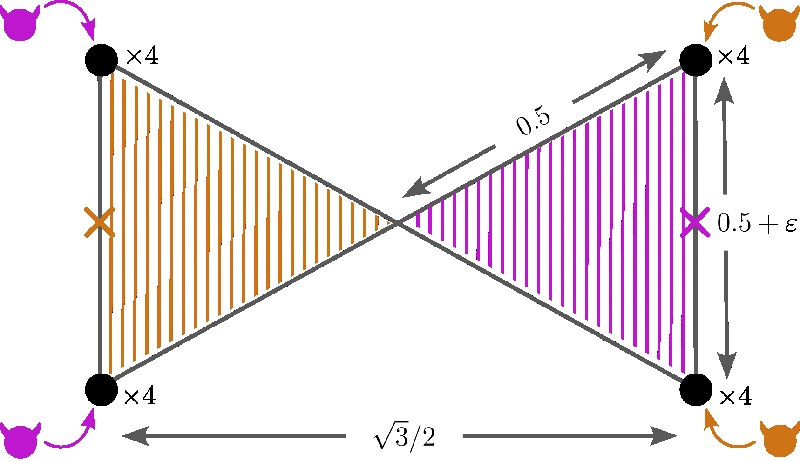
Modern distributed systems—ranging from collaborative machine learning to large-scale elections—often struggle with the challenge of ensuring all parties reach a consensus, especially in the presence of faults or malicious nodes. A breakthrough research, titled "Faster Convergence of Multidimensional Approximate Agreement via Smallest Enclosing Balls" by Darya Melnyk, proposes an innovative solution to this long-standing problem with an exciting new protocol called BallMidpoint, which significantly enhances convergence rates in agreements among multiple parties.
The Core Problem: Multidimensional Approximate Agreement
The multidimensional approximate agreement problem is a daunting task in distributed systems. This problem revolves around ensuring that 'n' participating parties output vectors that are not only close in values but also lie within the convex hull of all non-corrupted inputs. The primary challenge lies in the presence of up to 't' potentially corrupt nodes that can mislead the remaining parties. Traditional protocols have had limited success, often resulting in slow convergence rates—making them impractical in real-world applications.
Introducing BallMidpoint: The Game Changer
The BallMidpoint protocol introduces a novel approach by utilizing the midpoint of the smallest enclosing ball of a newly defined area—termed the 'local safe area'—to select more accurate output vectors in iterative agreements. This method accurately conforms to the convex validity condition, maintaining the integrity and reliability of the agreement process. What sets BallMidpoint apart is its ability to achieve a contraction rate of 1/√2 (approx. 0.707), moving significantly closer to the theoretical best performance compared to earlier algorithms which settled with rates around √7/8 (approx. 0.935).
Key Contributions and Results
This research is groundbreaking not only for its technical advancements but also for its practical implications. The BallMidpoint protocol is the first multidimensional approximate agreement protocol achieving a contraction rate that is tighter to the known lower bound than its predecessors. It has been demonstrated to perform under both synchronous and asynchronous communication models, expanding its usability across various types of distributed systems.
Efficiency in Action
Moreover, the protocol emphasizes efficient local computability of the midpoint within the smallest enclosing ball, ensuring that the nodes can calculate their outputs quickly and effectively. This is particularly important in applications that require real-time results, showcasing its potential in areas like collaborative learning and optimization tasks.
Conclusion and Future Directions
The implications of the BallMidpoint protocol are vast, offering enhanced performance for multidimensional data agreements in numerous fields. The findings suggest that there is room for future research to further improve the contraction rate and explore additional communication models. This research represents a significant step forward in the effort to build robust distributed systems capable of resilient and rapid consensus, even in uncertain environments.
Overall, the BallMidpoint protocol not only sheds new light on the approximate agreement issue but also lays down a roadmap for future innovations in distributed systems technology.




