
Breaking the Mold: How Topological Mixing Advances Our Understanding of Active Bacterial Matter
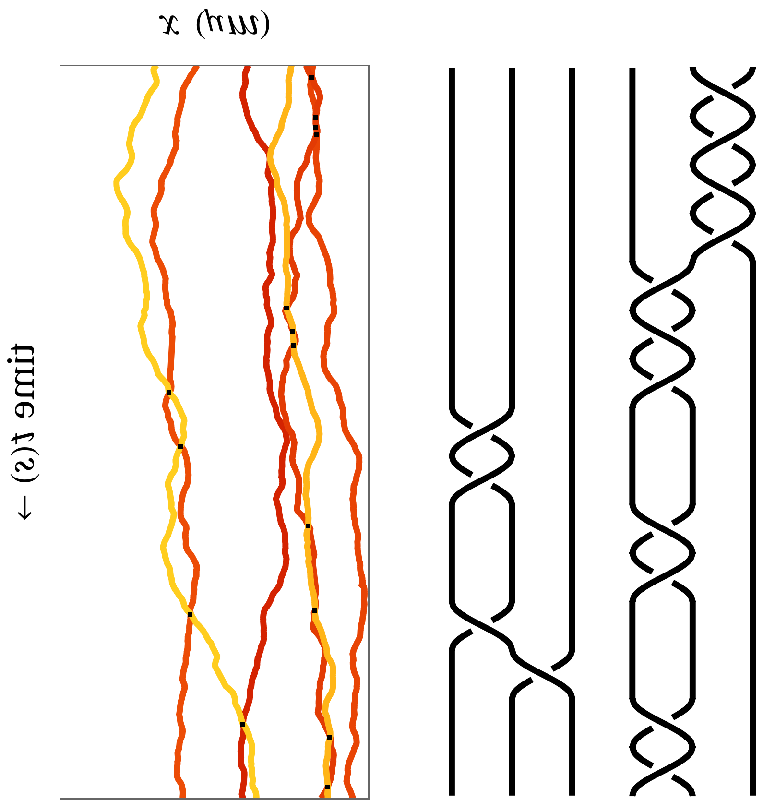
In a groundbreaking study, researchers from Northwest University and the University of Copenhagen are unraveling the complex behaviors of bacterial suspensions through a novel application of topological braiding theory. Their research, titled "Topological Mixing and Braiding Universality in Polar Active Matter," reveals how self-propelled microorganisms can dramatically enhance fluid mixing and transport properties in a manner previously unseen.
The Power of Active Matter
Active matter, which includes self-propelling particles like bacteria, continuously injects energy into their environment, leading to unique collective behavior and turbulent flow characteristics. The study focuses on how these dynamics differ when the microorganisms are confined in various environments, offering vital insights into how we might manipulate liquid systems for improved nutrient transport or even the design of new materials.
Introducing the Finite-Time Braiding Exponent
At the heart of this research is the finite-time braiding exponent (FTBE), a measure used to quantify the complexity and chaotic mixing of these bacterial suspensions. By mapping Lagrangian trajectories of fluorescent ‘spy’ bacteria within a dense host environment, the researchers uncovered a sequence of distinct topological mixing phases that shift based on bacterial density and confinement levels.
In less confined settings, the hydrodynamic interactions help facilitate the formation of coherent vortices and active turbulence. This phenomenon, in turn, becomes crucial for nutrient dispersal and metabolic functions in living systems. In contrast, severe confinement reduces mixing effectiveness as the dense particles engage in steric collisions, ultimately leading to simplified flow dynamics.
Key Findings and Implications
The study identified three unique regimes of topological mixing linked to changes in bacterial concentration. In a diluted state, bacterial interactions promote an active gas-like behavior, while increasing density transitions the behavior towards chaotic active turbulence characterized by coherent jet flows. Crucially, when confined too tightly, mixing is hindered due to mismanaged collective motion, underscoring the importance of spatial constraints in biological systems.
One of the most surprising outcomes was the discovery of a square-root law relating the FTBE to effective diffusivity, indicating that higher mixing complexity is inherently tied to the underlying micro-level dynamics of the system. This correlation positions the behavior of these active fluids into a classification known as the Pathline Braiding Universality Class, linking abstract mathematical concepts with tangible physical behavior.
Future Directions
The implications of this research extend beyond mere academic curiosity. Understanding the transport and mixing of bacterial populations can potentially inform biotechnological applications, such as enhancing microbial fuel cells or developing smarter drug delivery systems. The researchers hope to leverage these insights to inform the design of synthetic active materials that can adaptively improve fluid mixing in biological contexts.
As we continue to unravel the complexities of living fluids, studies like these not only bridge the gap between physics and biology but also pave the way for innovative applications across various scientific fields.
Authors: Wei Feng, Tianyu Ren, Zhihan Ye, Jonas Berx, Guangyin Jing




