Breaking Through: How Hydra Tissues Manage Repeated Ruptures and Repairs
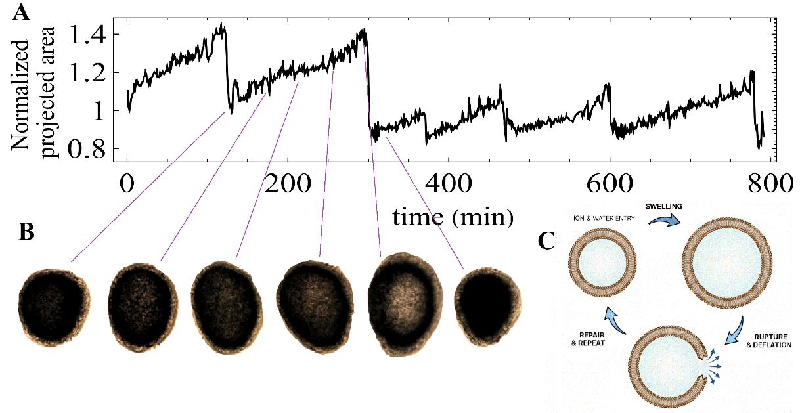
Research from scientists at The Hebrew University of Jerusalem and the Technion-Israel Institute of Technology reveals fascinating insights into the regeneration processes of Hydra, a small aquatic organism. Their study investigates how these organisms can persistently rupture and then repair their tissues, effectively cycling through the stages of destruction and healing. This process offers a unique model for understanding tissue mechanics and damage control in biological systems.
The Rupture-Repair Cycle
The research focuses on the mechanical interplay of rupture and repair in Hydra tissues, employing advanced imaging techniques to track the phenomenon over time. Hydra tissues demonstrate a mechanical cycle characterized by osmotic inflation leading to internal pressure buildup, rupture, and subsequent resealing. This cycle repeats, showcasing the Hydra's ability to recover and return to a functional state after each disruption.
Calcium's Crucial Role
One of the paper's key findings is the significant role that calcium ions (Ca²⁺) play in the repair processes of Hydra tissues. The repair efficiency, which governs the severity and frequency of ruptures, is influenced by the Ca²⁺ activity. When the calcium response is disrupted, for instance by blocking communication channels between cells or inhibiting specific calcium channels, the tissues are more likely to experience larger pressure releases—signifying prolonged ruptures and a fundamentally different rupture behavior.
Understanding Event Statistics
The researchers analyzed the statistics of rupture events by observing the projected area of the Hydra tissue over time. They found that under normal conditions, rupture events generally exhibit a predictable pattern, characterized by well-defined scales in size. However, when calcium signaling is weakened, the distribution of rupture sizes shifts to a more complex, power-law behavior, aligning with the characteristics of critical phenomena seen in other natural systems, such as earthquakes.
Implications for Regeneration and Repair
This research not only sheds light on the regenerative capabilities of Hydra but also highlights a broader biological principle: the dynamic interplay between mechanical failures and the active processes responsible for repair. The findings suggest that as tissues undergo stress and ruptures, their repair mechanisms actively regulate the extent and severity of further ruptures, thus maintaining homeostasis and structural integrity. This insight has significant implications for understanding tissue repair in more complex organisms, including humans.
Future Applications and Insights
By linking the mechanics of tissue repair in Hydra to broader physical principles governing failure processes in materials science, this research opens the door to novel approaches in regenerative medicine and bioengineering. Understanding these fundamental mechanisms may inspire new strategies to enhance tissue repair in clinical settings, particularly in injuries or chronic wounds.

