
Decoding Quantum Cryptography: How Agentic Formalization of Shor's Algorithm Sets New Standards for RSA-2048 and P-256 Attacks
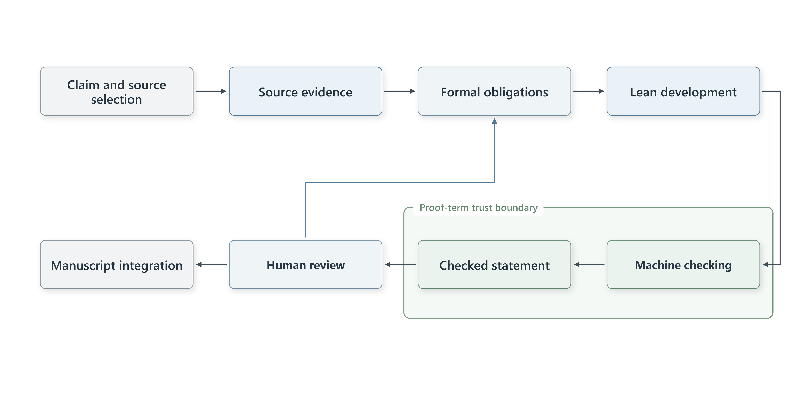
A groundbreaking research paper titled Building Shor’s Algorithm in Lean reveals a new method for formalizing quantum attacks on widely used cryptographic systems like RSA-2048 and P-256. This innovative approach, termed agentic formalization, employs software agents to aid in formal theorem-proving tasks. The implications for cybersecurity are monumental, as the research outlines machine-checked quantum cryptanalysis procedures that could significantly affect the security of current encryption systems.
The Importance of Formal Verification in Quantum Computing
In quantum computing, algorithms like Shor’s are crucial because they provide polynomial-time solutions for problems deemed difficult for classical computers, such as integer factorization and discrete logarithms. These problems form the backbone of many encryption schemes. By formalizing these algorithms using a proof assistant, Lean, the researchers ensure that the claims made about the quantum operations and their effectiveness are mathematically verified and free from errors.
What is Agentic Formalization?
Agentic formalization is a collaborative process where software agents conduct research, write code, and make repairs to proofs while humans oversee the scientific claims. This workflow combines human oversight with machine-verified checks, enabling a more efficient and reliable development of complex quantum algorithms. The formalization process records the connections between mathematical guarantees and circuit behaviors, providing a robust framework that can be reused in future quantum algorithm developments.
Breaking Down the Results: RSA-2048 and P-256
The paper presents two main applications of the formalization: attacking RSA-2048 and recovering the private scalar for the P-256 elliptic curve. For RSA-2048, a method is proposed that requires around 6,190 logical qubits and achieves a success probability of at least 2/3 in recovering one of the prime factors of the public modulus, which is a significant improvement over previous analyses of Shor’s algorithm.
Similarly, the analysis for P-256 demonstrates that quantum methods can recover the private scalar corresponding to a public key with a comparable success rate and resource requirements, showcasing the method’s versatility.
Implications for the Future of Quantum Cryptography
This research paves the way for broader implementations of machine-checked quantum cryptanalysis, setting a precedent for enhanced mathematical rigor in the evaluation of quantum algorithms. With the increasing sophistication of quantum computers, understanding and fortifying the security of cryptographic systems becomes ever more essential. The findings from this study not only promise a leap forward in how quantum attacks are analyzed but also indicate a growing need to rethink the foundational algorithms that secure our digital infrastructure today.




