
Discover the Future of Quantum Computing: Unitary Schur Sampling via Random SWAP Tests Unraveled
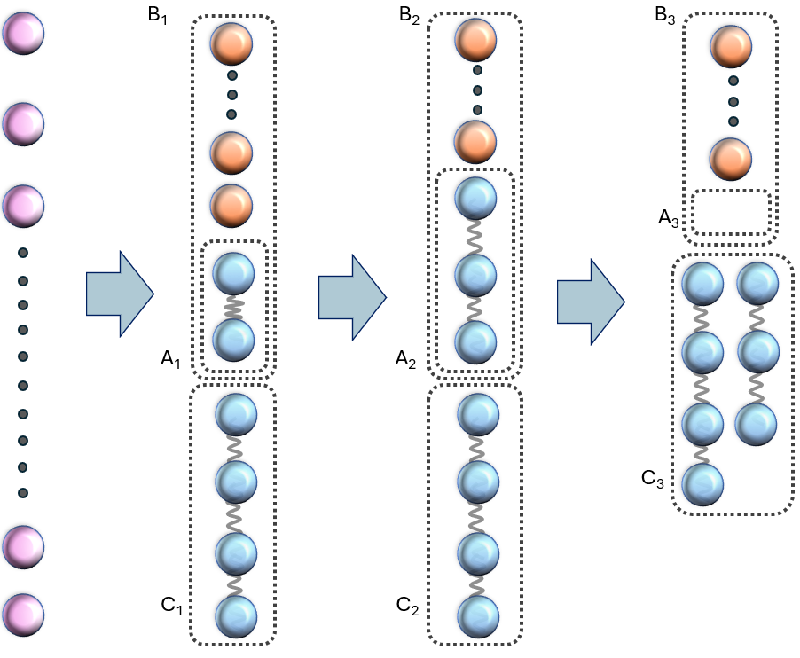
A groundbreaking research paper by Shrigyan Brahmachari and colleagues from Duke University unveils an innovative method to perform unitary Schur sampling using a simple and efficient approach — random SWAP tests.
The Importance of Unitary Schur Sampling
Unitary Schur sampling is a vital technique in quantum information science that allows the extraction of permutation-invariant information from complex many-body quantum systems. Understanding these systems is crucial for developing quantum algorithms and applications, ranging from quantum metrology to state purification.
Traditionally, implementations of the Schur sampling technique involved sophisticated representation-theoretic operations, which can be cumbersome and resource-intensive. However, Brahmachari et al. shift the paradigm by demonstrating that unitary Schur sampling can be efficiently achieved via pairwise SWAP tests — a much simpler operation.
SWAP Tests and Their Role
SWAP tests, which measure the degree of overlap between quantum states, form the cornerstone of this new protocol. When applied to qudits (quantum systems with d-dimensional states), these tests can identify and extract the largest antisymmetric subsystem from mixed quantum states in a straightforward manner.
The researchers highlight that the number of tests required scales linearly with the number of qudits, making it feasible for practical quantum computing systems. Specifically, their method achieves an error tolerance defined in terms of diamond distance, utilizing only O(n min{n, d}³ log(n/ϵ)) SWAP tests.
An Insight into the Algorithm
The authors present a two-pronged algorithm: first, to extract antisymmetric subsystems, and second, to perform transformations on them. This process is intuitively akin to traversing a Young diagram, where each step involves identifying and separating a subsystem associated with the largest antisymmetric dimension.
The significance of their method extends beyond the technical aspects; it paves the way for enhanced quantum purification practices, where multiple noisy copies of a pure quantum state can be combined to yield a state of higher purity. This application is particularly relevant in optimizing quantum fidelity for algorithms reliant on high-quality qubits.
Challenges and Solutions
While harnessing randomness offers robust benefits, the challenge lies in ensuring the reliability of outcomes in practical settings. The researchers adeptly navigate this issue by employing permutation twirls post-measurement, ensuring that the underlying quantum information remains intact and usable, despite potential measurement errors.
By thoroughly analyzing the complexity and performance metrics, the study asserts that their approach matches or even surpasses traditional methods' efficacy, while being more suitable for implementation on near-term quantum devices.
Conclusion: A Step Forward in Quantum Technology
This research not only contributes valuable insights into unitary Schur sampling but also enhances the toolkit available for quantum computing. As sector leaders strive for efficient algorithms that can be practically applied, the novel techniques outlined by Brahmachari and his team stand to redefine how researchers and engineers approach quantum system analysis and optimization.
With the continual evolution of quantum technology, anticipations are high for how these advancements will affect both theoretical and applied quantum physics.
Authors: {Shrigyan Brahmachari, David Jakab, Henry D. Pfister, Iman Marvian}


