
Diving into Mud: How Controlling Mud Strength Could Revolutionize Locomotion Studies
A groundbreaking research paper from the Department of Mechanical Engineering at Johns Hopkins University sheds light on the challenges of locomotion in muddy environments. In a study led by Divya Ramesh, Gargi Sadalgekar, Qiyuan Fu, Zachary Souders, Jack Rao, and Chen Li, the authors explore the complex dynamics of mud as a medium for both animals and robotic systems.
Understanding the Unique Nature of Mud
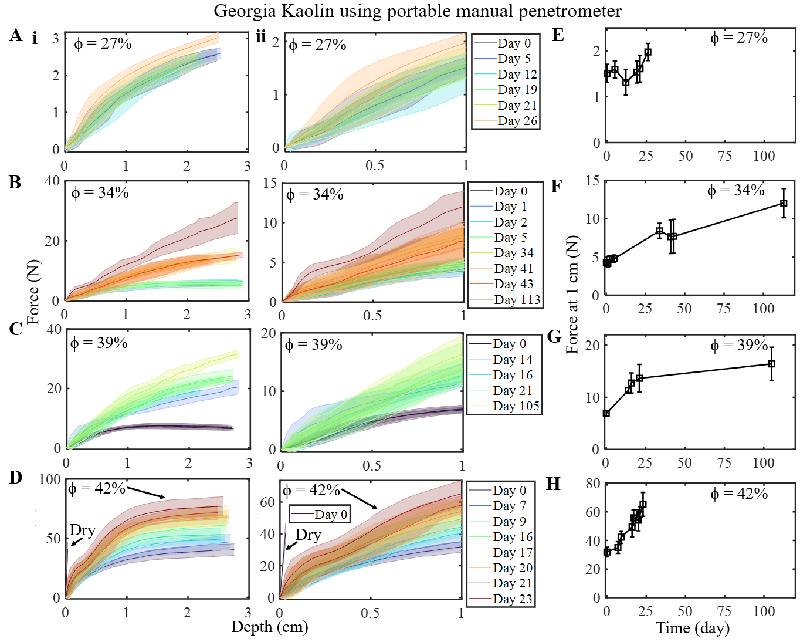
Unlike dry sand, where growth and movement are defined by granular dynamics, mud presents a unique challenge: it can switch between solid and fluid states depending on its yield strength. This transition is influenced by various factors, including the ratio of water to solid content and the proportions of fine clay and coarse grains. This study highlights the necessity of precisely controlling and characterizing mud strength for locomotion research, which has been scarce compared to the extensive work done on dry sand scenarios.
Innovative Methods for Mud Preparation and Characterization
The researchers developed a series of low-cost tools and protocols to prepare and control the properties of mud samples, facilitating uniformity in experiments. They designed an automated mixing system that improves mud consistency and enhanced penetrometers to accurately measure yield strength. By measuring how strongly the mud resists intrusion, the team can characterize its unique spatiotemporal properties.
Findings that Challenge Previous Assumptions
Key findings from the study reveal that the yield strength of mud dramatically varies with its composition, with the potential to change by orders of magnitude merely by adjusting the water content. The researchers observed that mud sticks significantly more than sand, amplifying the energy costs associated with locomotion in muddy conditions. For creatures like mudskippers, this means they expend greater effort navigating through the terrain, leading to implications for bio-inspired robotic designs.
Implications for Future Locomotion Technologies
This study not only enhances our understanding of how organisms move through complex terrains but also provides vital insights that could inform the design of robots capable of traversing similar environments. As the team concludes, improved methods for preparing and measuring muddy substrates could pave the way for innovations in engineered locomotion systems, potentially transforming how machines are built to navigate earth's diverse environments.
What Lies Ahead?
The exploration of locomotion dynamics in muddy terrains is only beginning. This important research opens up new avenues for both biological study of animal behavior and advancements in robotics capable of effectively operating in challenging conditions. As scientists and engineers build on these findings, the future of locomotion studies and technologies looks poised for significant evolution.
For a detailed look into the methods and findings of this research, further reading can be found in the full paper, co-authored by Ramesh et al. from Johns Hopkins University.




