
Empowering Whistleblowers: The Breakthrough in Audit Anonymity Guarantees
Whistleblowers play a critical role in exposing wrongdoing within organizations, from corporate fraud to public sector misdeeds. However, the fear of retaliation often discourages individuals from stepping forward. A groundbreaking research paper by Leo Richter from University College London and Matt J. Kusner from École Polytechnique de Montréal seeks to address this concern by proposing a novel auditing framework that enhances the anonymity and protection of whistleblowers.
Understanding the Challenge
Current mechanisms aimed at protecting whistleblowers frequently fall short of providing robust privacy guarantees. Recent legal frameworks, such as the EU Whistleblower Protection Directive, emphasize confidentiality in reporting channels but leave gaps in what organizations can infer from subsequent audit actions. The threat evolves when organizations can monitor audit processes to deduce potential whistleblowers, which poses a significant risk to those who report misconduct.
An Innovative Solution: Differential Privacy for Whistleblower Reports
The authors introduce a sophisticated model that formalizes whistleblower auditing as a form of per-report differential privacy, specifically (0, δ)-differential privacy. This model ensures that even if an organization can observe audit decisions, it cannot definitively determine whether a particular whistleblower report led to those audits. By utilizing randomized auditing mechanisms, the system introduces elements of chance into audit selections, significantly hindering an organization's ability to pinpoint who reported misconduct.
Key Findings and Simulations
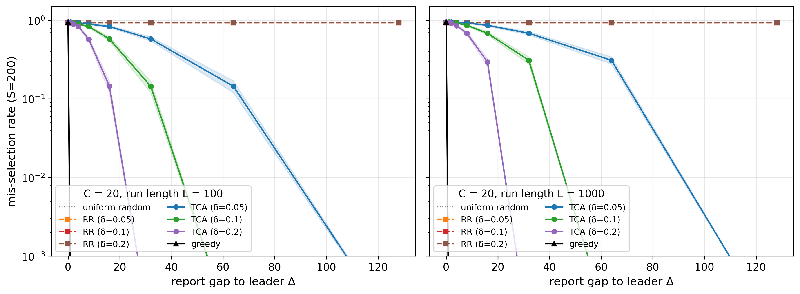
Richter and Kusner reveal that traditional methods, such as randomized response techniques, fail to outperform uniform random auditing in terms of privacy guarantee. Rather than simply obscuring report counts, their novel auditing mechanism utilizes a continual counting framework that dynamically adjusts based on received reports, enhancing both privacy and utility. The result is a significant reduction in the probability that the audited organization can accurately identify whistleblowers.
The research included simulation studies demonstrating that their proposed method substantially decreases misidentification rates compared to classical techniques under similar privacy parameters. This means that organizations can conduct audits without exposing whistleblowers to undue risk.
Implications for AI and Governance
This research has profound implications for governance structures surrounding artificial intelligence (AI). As organizations face increasing scrutiny over AI systems, maintaining confidentiality of reports about AI-related misconduct becomes essential. The results advocate for a framework where insider knowledge contributes to responsible auditing without compromising individual privacy.
Conclusion: A New Era for Whistleblower Protection
The work by Richter and Kusner paves the way for improved whistleblower mechanisms, fostering an environment where reporting wrongdoing can be done safely and securely. With the introduction of formalized privacy guarantees, organizations are now better equipped to uphold ethical standards while empowering whistleblowers to come forward.
In a world where transparency and accountability are essential, this research provides a much-needed solution to enhance whistleblower protections, encouraging individuals to report misconduct without the fear of retaliation.
Authors: {Leo Richter, Matt J. Kusner}




