
Freezing Point Meets Protein Stability: How Ice Reshapes Molecular Dynamics
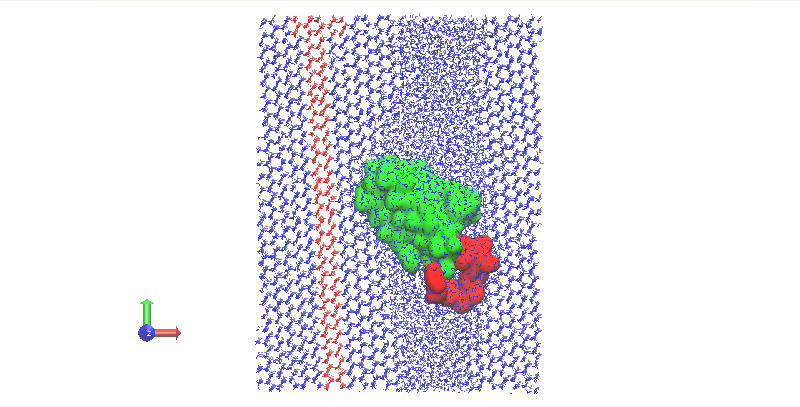
In a groundbreaking study, researchers have unveiled the complex interaction between protein stability and the freezing of water, shedding light on longstanding questions in biophysics. The research, conducted by a team including Yanis R. Espinosa from the University of Pamplona, explores the behavior of the yeast frataxin protein (Yfh1) as it encounters a crystallizing aqueous environment. This work could have profound implications for our understanding of cryopreservation and cold denaturation in proteins.
The Ice Effect: Understanding Protein Dynamics
Traditionally, the stability of proteins at low temperatures has been attributed solely to temperature. However, this new research suggests that the structural organization of water plays an equally important role. As water crystallizes into ice, it imposes geometrical constraints on proteins, significantly reducing their conformational freedom. This study utilized molecular dynamics simulations to observe these interactions in real-time.
Simulating Realities: Molecular Dynamics in Action
The researchers employed advanced molecular dynamics simulations to capture the moment water starts to freeze around Yfh1. By setting up experiments at various temperatures—specifically at room temperature, the temperature of maximum density, and just below the melting point of water— they were able to isolate the effects of temperature from those of the solvent phase. This method revealed that as ice forms, the space available for the protein to flex and move is devastated, leading to a shift from a fluid motion to a more confined state dominated by stable configurations.
Key Findings: The Dual Role of Water
One of the most crucial discoveries is that while the ice maintains a dense hydration layer around the protein, it simultaneously constrains the protein's ability to sample different conformational states. The research indicates that as water transitions from liquid to solid, it does not merely freeze but also reorganizes around the protein, altering the hydration dynamics crucial for its stability. Thus, the structural characteristics of both liquid and frozen water are important in determining protein behavior under freezing conditions.
Implications for Cryopreservation
The results of this study could lead to novel approaches in the field of cryopreservation, a method widely used in various biological and medical applications. A deeper understanding of how proteins behave as they freeze can help in improving preservation methods, ensuring proteins maintain their structure and function post-thaw. This could be vital for the future of drug development and storage of biological materials.
Conclusion: A Paradigm Shift in Understanding Protein Stability
This research not only challenges existing models of protein behavior at low temperatures but also opens new avenues for exploring the hydration dynamics that underpin biological functions. The findings underscore the sophistication of molecular interactions under conditions far removed from typical physiological environments, highlighting the intricate balance between temperature, solvent behavior, and protein stability.
As science continues to decode the complexities of proteins, studies like these pave the way for innovative strategies in biology, medicine, and materials science.
Authors: {Yanis R. Espinosa, H. Ariel Alvarez, C. Manuel Carlevaro}




