Harnessing the Power of Light: Self-Propelled Microparticles Revolutionize Drug Delivery
Recent research reveals a groundbreaking method for creating self-propelled particles that rely solely on light for movement. This innovation could pave the way for advanced applications such as targeted drug delivery and the development of micro-robots that navigate within living tissues.
The Science Behind Light-Driven Movement
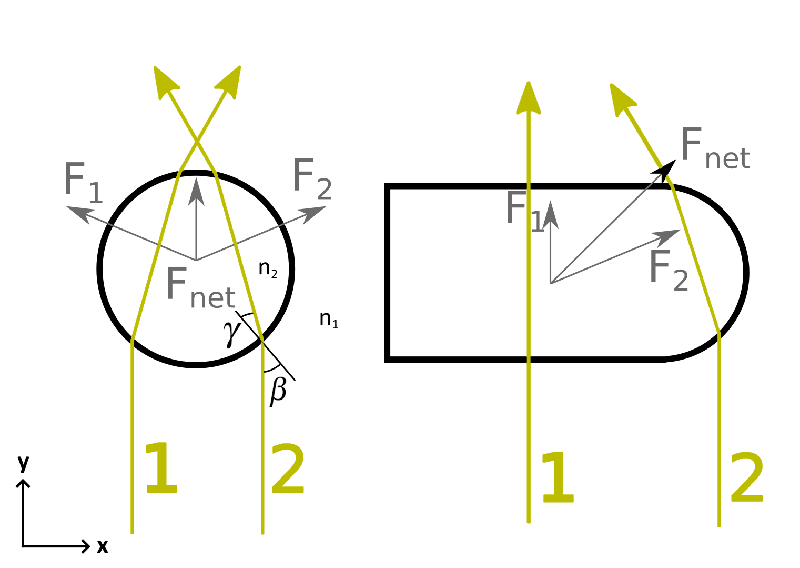
While traditional self-propelling particles typically use chemical fuels to generate motion, this new approach leverages light as a clean and continuous energy source. By constructing specially shaped and transparent particles that refract light differently, researchers found that these particles could be set in motion when exposed to a homogeneous light source.
The study, spearheaded by researchers Jannis Fischer, Alejandro Jurado, and Timo Betz, outlines how light refraction leads to momentum transfer, propelling the particles. Notably, the research illustrates that altering the shape of the particles can significantly influence their propulsion efficiency.
Experimental Findings
Through a combination of simulations and experimental data, the team successfully demonstrated how particles shaped like bullets exhibited enhanced movement compared to spherical ones. The asymmetrical shape of the bullet particles allowed for a net momentum transfer, enabling them to move faster and more purposefully when subjected to light.
In practical experiments, the bullet particles outperformed their spherical counterparts significantly, especially at different laser intensities. As the laser power increased, so did the velocity and directionality of the bullet-shaped particles, confirming their potential superiority in applications involving precise motion control.
Potential Applications and Future Directions
The implications of this research are vast. The ability to navigate and control self-propelled particles using light could revolutionize how we approach tasks like drug delivery within the body, effectively allowing for treatments to be administered with unprecedented precision. Furthermore, this technology could lead to the development of micro-robots that undertake intricate operations without harmful materials.
As researchers continue to refine the designs and capabilities of these light-driven particles, we may soon enter an era where synthetic microscopic machines can work safely alongside biological systems, ushering in advancements in medicine, biotechnology, and material science.

