
Harnessing the Power of Observation: A Breakthrough in Robot Coordination through Constraint Inference
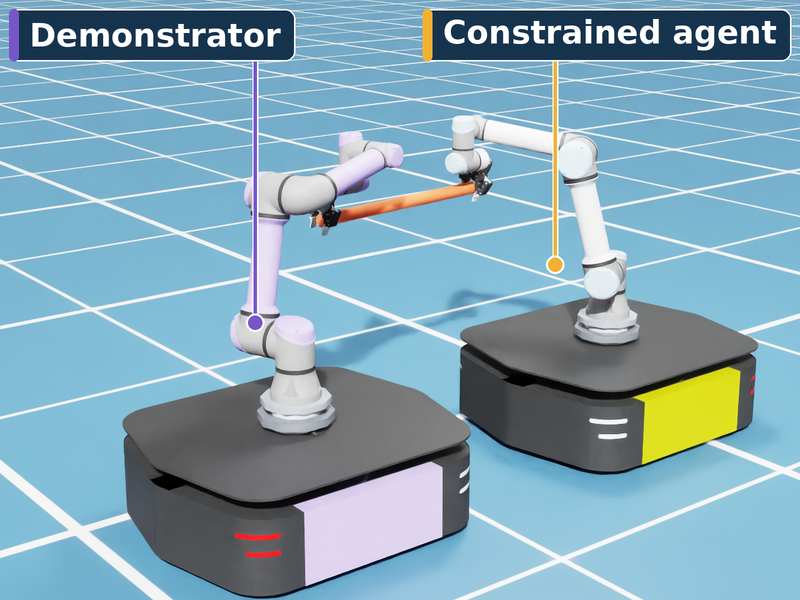
As robots become increasingly integrated into daily life and complex environments, the ability for them to work together seamlessly is paramount. A recent study, titled "fWATCH, INFER, COORDINATE: Inferring Robot Partner Constraints for Zero-Shot Coordination," addresses this challenge in a groundbreaking manner. Led by researchers from the Honda Research Institute USA and Johns Hopkins University, this paper presents a new framework that allows robots to infer the physical constraints of their partners simply by observing them in action.
The Challenge of Coordination
Many robotic tasks, especially those involving the transportation of heavy or bulky objects, require multiple robots to collaborate closely. However, each robot may face different physical limitations due to factors such as hardware degradation or design constraints. The central question posited by the researchers is: can one robot learn about its partner's capabilities by observing it coordinate with another robot before embarking on a new task? This is particularly challenging because a robot’s observed actions do not directly indicate what it is physically capable of doing; they reflect only what it has managed under specific circumstances.
Introducing the Watch, Infer, Coordinate Framework
The proposed framework breaks down the process into three main components: Watch, Infer, and Coordinate. First, a robotic helper observes a constrained partner performing a joint task with another robot (the demonstrator). This observation allows the helper to infer the partner's constraints—such as limits on joint positions, velocities, and operational capabilities. Following this, the helper applies the learned constraints to effectively coordinate with the same partner on a new, yet different task without prior direct interaction, demonstrating 'zero-shot coordination.'
Key Findings and Implications
The researchers constructed a benchmark consisting of various physically coupled manipulation tasks and demonstrated that their method significantly enhances constraint inference and coordination success. For instance, their innovative approach achieved over 92% coordination success in one of the task settings, highlighting the potential for robots to automatically adapt to their partners' capabilities simply through observational learning.
By successfully demonstrating that robots can infer constraints through observed interactions, this research sets the stage for more intelligent and autonomous robotic systems capable of seamlessly integrating into human environments. Such advancements could lead to more sophisticated collaborative robots in sectors ranging from manufacturing and healthcare to disaster response.
Future Directions
Though the study's initial results are promising, the authors acknowledge several limitations. Their current model assumes known variables, such as behavioral models and goals, without accounting for uncertainties that might occur in real-world scenarios. Future research aims to relax these assumptions and expand the framework's applicability to more complex environments and tasks involving heterogeneous teams including human collaborators.
The implications of this research could be profound, potentially leading to a new era of adaptive robots that can quickly learn and adjust to the physical limits of their partners, paving the way for enhanced cooperation in varied real-world situations.
Authors: {Suyu Ye, Zheyuan Zhang, Vaishnav Tadiparthi, Hossein Nourkhiz Mahjoub, Ehsan Moradi Pari, Tianmin Shu, Homanga Bharadhwaj, Nakul Agarwal}


