
How GitHub's Agentic Coding Tools Are Shaping Software Development: An Inside Look
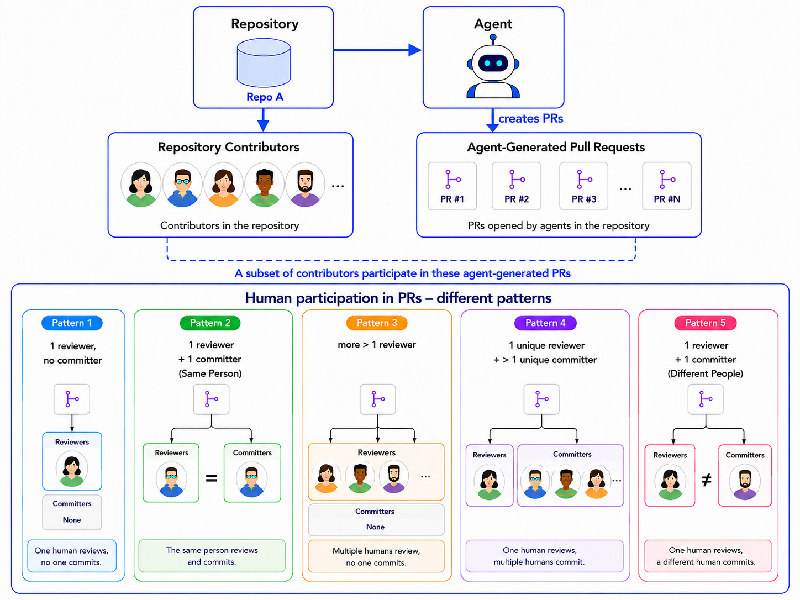
Recent research has lifted the lid on the early adoption patterns of agentic coding tools within GitHub projects. The paper, titled "Early Adoption of Agentic Coding Tools by GitHub Projects," authored by Maliha Noushin Raida and Daqing Hou from the Rochester Institute of Technology, offers a comprehensive analysis of over 25,000 agentic pull requests (PRs) from 2,361 popular repositories on GitHub, revealing crucial insights into the project-level adoption and patterns of human-agent collaboration.
Understanding Agentic Coding Tools
Agentic coding tools are revolutionizing software development by transitioning from mere assistants to semi-autonomous agents capable of generating and submitting pull requests independently. This shift raises important questions: How are human developers coordinating with these agents? How widely are they being adopted across different projects? The research provides foundational insights into how these tools are reshaping collaborative software development practices.
The Adoption Landscape
One of the striking findings from the study is the uneven adoption of agentic coding tools across projects. The median repository only generated one to two agentic PRs over the studied three-month period. This suggests that while many projects are starting to embrace these tools, intensive adoption remains largely concentrated among a select few. Smaller projects (with one to five contributors) demonstrated a higher participation ratio in agentic workflows compared to their medium and large counterparts.
Human-Agent Collaboration Patterns
The study also sheds light on collaboration dynamics between humans and coding agents. Surprisingly, a single-human oversight model predominates, with one developer often both reviewing and modifying the contributions of the agent. Multi-human collaboration is comparatively rare, even in larger projects, which indicates a continued reliance on individual oversight rather than team-based approaches.
Implications for Future Development
The findings highlight the need for projects to adapt their governance structures and review processes as agentic tools become more commonplace. This transition could support a more sustainable integration of human and AI contributions in software development workflows. The study emphasizes that the effectiveness of agentic coding tools does not solely depend on their technical capabilities but also on how human developers interact with and oversee the agents.
Setting the Stage for Further Research
The authors underline the importance of continuing to monitor these adoption patterns to grasp their evolution as technology advances. With agentic coding tools poised to become an integral part of software development, understanding how they influence productivity, team dynamics, and project outcomes will be crucial for developers and organizations alike.
In summary, Raida and Hou’s research provides a significant look into how the integration of agentic coding tools is unfolding across the GitHub landscape, offering key takeaways for software professionals interested in optimizing their development practices.




