
Is Your Recommender System Playing Fair? Discover the Intriguing Impact of Coordinated-Content Penetration!
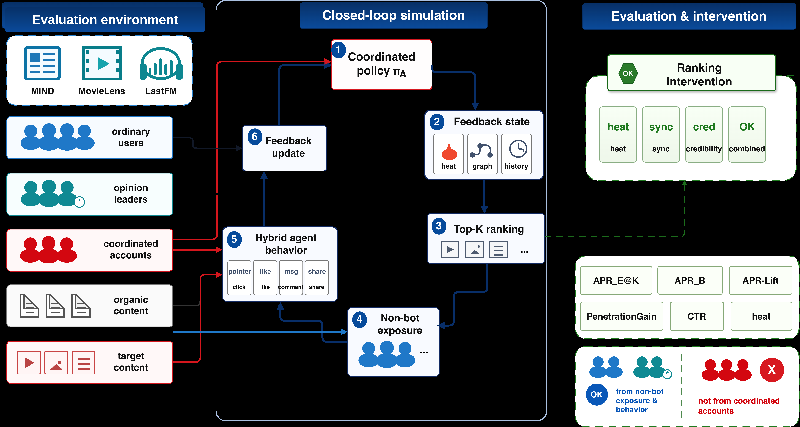
In an age where digital recommendations shape our online experiences—from the movies we watch to the music we listen to—understanding the mechanics behind these systems is paramount. A recent research paper titled "CoSimRec: Measuring Coordinated-Content Penetration in Recommender Feedback Loops" sheds light on how coordinated activities from specific accounts can distort content visibility, adversely affecting user perception and interaction. The study, authored by Nan Li, Jiahong Shao, and Jiuyang Lyu, presents a novel framework called CoSimRec to evaluate these impacts effectively.
What is CoSimRec?
CoSimRec is an offline agent-based evaluation framework that examines the intricacies of recommendation systems and their feedback loops. In simple terms, it assesses how recommendations not only influence user behavior but also how coordinated actions by certain users can manipulate which items gain visibility to the broader user base. This involves measuring what the authors term "Algorithmic Penetration Rate" (APR), which quantifies how much exposure and engagement specific content receives from non-coordinated users.
The Dynamics of Feedback Loops
The authors emphasize that recommendation systems don't operate in a vacuum. They are part of a feedback loop where user interactions guide future recommendations. For instance, if a particular piece of content receives a lot of clicks from coordinated accounts (possibly set up for manipulation), it may gain popularity and, consequently, be recommended to non-coordinated users more frequently. CoSimRec uniquely tracks these dynamics to quantify whether such manipulations actually reach and influence broader audiences.
Findings: Coordinated Content vs. User Engagement
The research conducted experiments using popular datasets like MIND, MovieLens, and LastFM. The experiments reveal that while random recommendations show little to no penetration of coordinated content, specific recommendation strategies—especially those sensitive to user feedback—show significant positive penetration rates. For instance, the authors found that under specific coordinated strategies, penetration rates could soar as high as **0.4505** in some cases, indicating that coordinated accounts can effectively push content into the mainstream user recommendations.
Implications for Users and Platforms
This research fills a critical gap in understanding the integrity of recommender systems. It indicates a pressing need for platforms to assess how recommendations are formed and actively manage the potential for manipulated content. By identifying the mechanisms and impacts of coordinated user behavior on recommendations, platforms can adopt better transparency and fairness measures, enhancing the overall user experience and trust.
In Conclusion
The CoSimRec framework not only paves the way for deeper insight into recommender systems but also highlights the necessity for heightened scrutiny. With such systems deeply embedded in our digital lives, understanding their vulnerabilities to coordinated influence is vital for ensuring fairness and integrity. As we continue to navigate the complexities of digital recommendations, research like this serves as a beacon for developing systems that protect genuine user interests.
As digital landscapes evolve, staying informed about how content is prioritized and suggested is imperative for users and developers alike.
Authors: Nan Li, Jiahong Shao, Jiuyang Lyu




