
Paving the Way for Lunar Living: Revolutionary Habitat Design Using Interlocking Regolith Blocks
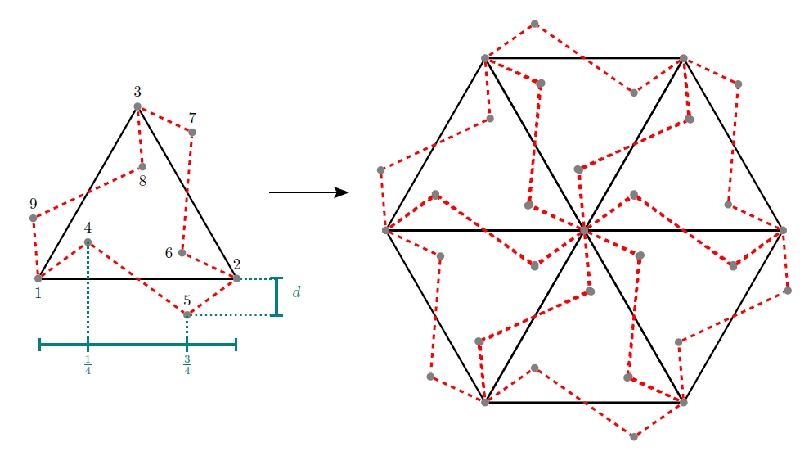
A recent study unveiled a groundbreaking design for lunar habitats that could transform human life on the Moon. Conducted by researchers from RWTH Aachen University and Monash University, this innovative approach utilizes a method called topological interlocking to create strong, efficient structures using lunar regolith, the Moon's natural material, eliminating the need for adhesives or connectors.
The Challenge of Lunar Living
As space agencies and private companies embark on ambitious plans to explore and potentially colonize the Moon, building safe and sustainable habitats is crucial. Traditional construction methods, however, face significant challenges in the harsh lunar environment, where transporting materials from Earth is not feasible due to high costs and logistical issues.
This is where the concept of in situ resource utilization (ISRU) shines. By harnessing lunar regolith, scientists can create building blocks that are not only lightweight but structurally resilient, making lunar habitats more viable for long-term human occupation.
Topological Interlocking: A Game Changer
The research team introduced a pyramidal design featuring blocks that interlock geometrically, providing structural stability without the need for external stabilizers like adhesives or connectors. This is particularly advantageous on the Moon, where the low atmosphere complicates the use of traditional adhesives and where transporting such materials from Earth would be impractical.
Finite element simulations demonstrated that these habitats could withstand local failures, ensuring that the overall structure remains intact even if individual blocks are damaged or removed. This feature is vital for lunar construction, especially considering the Moon's abrasive environment, which poses risks from micrometeorite impacts.
The Pyramidal Design: Function Meets Aesthetics
Inspired by ancient architectural prowess, the pyramidal design not only enhances structural efficiency but also incorporates aesthetic elements reminiscent of historical pyramids, such as those found in Egypt. The triangular faces of the pyramid optimize the internal space, creating a usable volume that would comfortably accommodate astronauts.
Each block within this design can be scaled to various sizes, enabling future expansions or reductions of the habitat. This flexibility addresses potential complications with evolving mission demands, allowing the habitat to adapt to changing needs easily.
Looking Ahead: Implications for Future Lunar Colonization
This innovative habitat design represents a significant leap forward in our quest for lunar colonization. By relying on materials found on the Moon, we can reduce reliance on Earth-sourced materials, thereby decreasing costs and increasing the sustainability of lunar missions.
In conclusion, as we set our sights on establishing a permanent human presence on the Moon, research like this is essential. The topological interlocking design offers a promising solution that marries modern engineering with ancient wisdom, paving the way for future lunar communities.
***Authors: Lukas Schnelle, Kai-Uwe Schröder, Alice C. Niemeyer, Yuri Estrin***


