
Quantum Leap in Financial Forecasting: How the Quantum Weighted Moving Average Could Revolutionize Limit Order Book Predictions
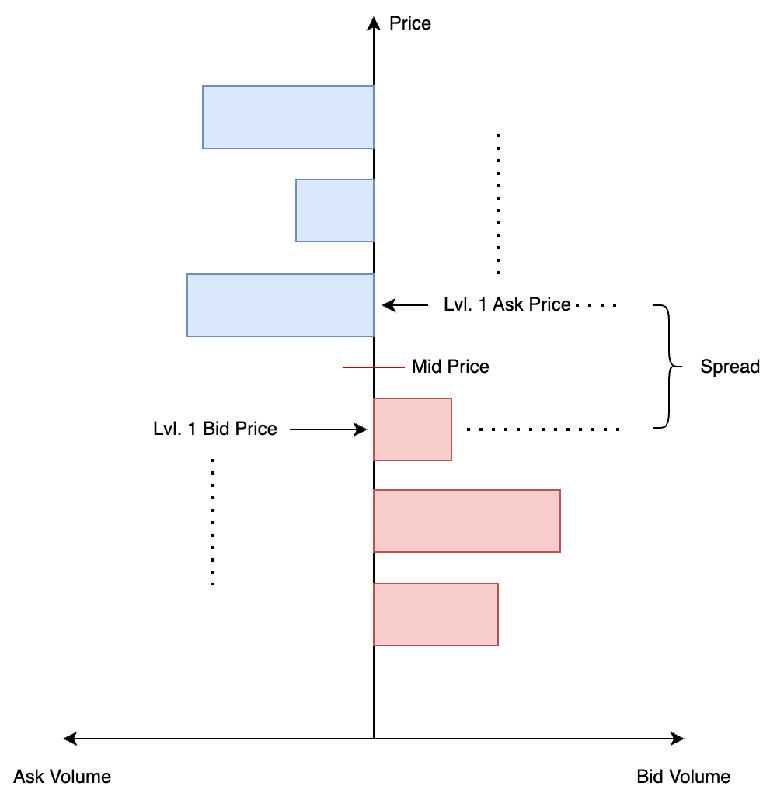
In a groundbreaking study, researchers Matthias Kamm, Dinh-Long Vu, and Patrick Rebentrost have introduced a novel quantum approach for predicting stock price trends using Limit Order Book (LOB) data. Their Quantum Weighted Moving Average (QWMA) model aims to combine classical methodologies with quantum computing techniques, presenting a bright future for financial forecasting.
The Challenge of Financial Prediction
Financial markets are notoriously complex and subject to numerous variables that can influence asset prices. Traditional models, while useful, often struggle to incorporate the multitude of features present in LOB data—where buy and sell orders are recorded in real-time. The introduction of machine learning techniques has brought improvement, but there remains a quest for more effective solutions.
Introducing the Quantum Weighted Moving Average
The QWMA model is pivotal, as it represents a fusion of classical preprocessing with quantum computational methods. By normalizing data dimensions and utilizing linear combinations of quantum unitaries, the model extracts and emphasizes the most predictive features of the time series data.
Kamm and his colleagues recognized that while their quantum model did not definitively achieve a quantum advantage over classical models, it performed comparably, indicating the potential of blending classical insights with quantum techniques.
How Does the QWMA Work?
At its core, the Quantum Weighted Moving Average utilizes a two-pronged approach:
- Classical Preprocessing: This involves normalizing both the features and temporal dimensions of the LOB data to prepare it for quantum processing.
- Quantum Embedding: Leveraging linear combinations of unitaries, the QWMA embeds classical data within a quantum framework, enhancing the model's ability to capture the intricacies of market dynamics.
The QWMA's architecture emphasizes the most relevant time steps in price movements, which can be crucial for making accurate predictions in fast-paced financial environments.
Promising Results and Future Directions
Evaluated against benchmark datasets, including the well-known FI-2010 collection and additional datasets focusing on China A-share stocks, the QWMA demonstrated strong predictive performance, thus reinforcing its applicability. Although there is no clear evidence of a quantum advantage yet, the results suggest that hybrid models could bridge the gap between classical and quantum systems in financial predictions.
The researchers argue that this quantum methodology could serve as a foundation for future exploration, with potential applications in real-time trading strategies and risk management frameworks. As quantum technology matures, the researchers are optimistic that these models could soon make their mark on real-world financial markets.
Conclusion
The introduction of the Quantum Weighted Moving Average model marks an exciting development in the intersection of quantum computing and finance. It sheds light on how quantum techniques can enhance traditional financial modeling, paving the way for innovative approaches to forecasting stock price movements from complex datasets.
As the models continue to evolve, the financial world may very well witness a transition towards a new era of predictive analytics, driven by the synergistic potential of classical and quantum computing.
Authors: {Matthias Kamm, Dinh-Long Vu, Patrick Rebentrost}




