
Redefining Large Language Model Fine-Tuning: A Breakthrough with Adaptive Step Selection
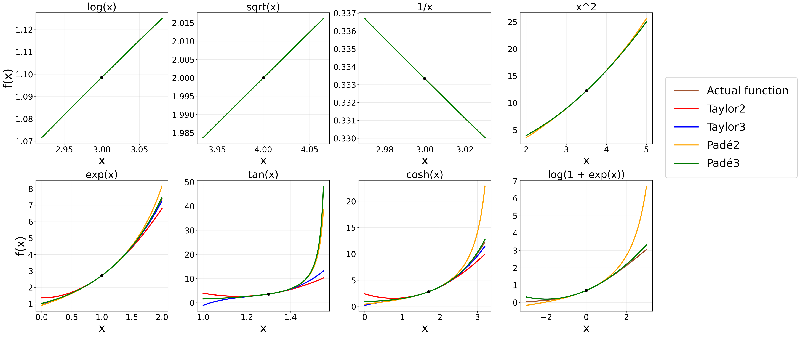
In the quest to improve large-scale neural network optimization, a groundbreaking approach known as Zero-and-First Order optimization (ZFO) has emerged. This innovative method addresses a lingering challenge in training large language models (LLMs)—the critical task of step-size selection. Researchers Cristian McGee, El Houcine Bergou, and Aritra Dutta have unveiled a framework that effectively separates direction selection from step size, paving the way for improved fine-tuning efficiency.
The Challenge of Step-Size Selection
Step-size selection, or learning rate determination, remains one of the most challenging aspects of optimizing neural networks. Incorrectly selected step sizes can either slow convergence if too conservative, or destabilize training if too aggressive. This fine balance is particularly crucial in complex settings like LLMs, where the local geometry of the loss surface can change rapidly during adaptation.
The ZFO framework combines the strengths of conventional first-order (FO) optimizers—which provide directional guidance through gradient information—with zeroth-order (ZO) evaluations, which estimate objective function behavior without the need for gradients. By integrating these two approaches, ZFO proposes a robust mechanism to determine 'how far to move' along a chosen gradient direction, enhancing performance without incurring the costs associated with exhaustive line searches.
How ZFO Works: The Mechanics Behind the Innovation
At its core, the ZFO framework works by first positioning a trusted first-order optimizer to dictate the direction of movement based on gradient information. The step size, however, is then refined through two additional objective function evaluations along this path. This process constructs a local model of the objective function, allowing the framework to determine a curvature-aware step within a defined search interval.
This dual evaluation strategy not only minimizes the computational cost compared to full line searches but also provides theoretical assurances that ZFO converges toward a stationary point in the optimization landscape. The researchers detail how this step-selection can outperform traditional fixed-step first-order baselines, resulting in more stable and reliable optimization.
Empirical Validation and Results
The effectiveness of the ZFO framework has been rigorously tested across various configurations, showing consistent improvements in fine-tuning performance over conventional methods. In a series of experiments involving different language models and tasks, ZFO frequently matched or exceeded the results of standard first-order and zeroth-order benchmarks. For instance, the results highlight substantial enhancements in model accuracy across datasets known for their complexity.
The framework’s ability to adaptively scale step sizes based on local function behavior illustrates a new frontier in machine learning. By optimizing the step-selection process, ZFO prevents the potential pitfalls of static learning rates, allowing for rapid convergence even in the face of noise and instability in the training data.
Conclusion: The Future of Fine-Tuning
The introduction of the ZFO framework signifies a substantial leap forward in optimizing large language models. Its innovative approach not only enhances model training efficiency but also underscores the importance of adaptability in machine learning practices. As researchers continue to refine these techniques, ZFO stands poised to transform the landscape of neural network training by offering a more nuanced understanding of step-size adaptability, ultimately setting a new standard for performance in the evolving field of artificial intelligence.
Authors: Cristian McGee, El Houcine Bergou, Aritra Dutta.


