
Reimagining Consumer Loyalty: The Game-Changing DVM-HALL Model for Autonomous Commerce
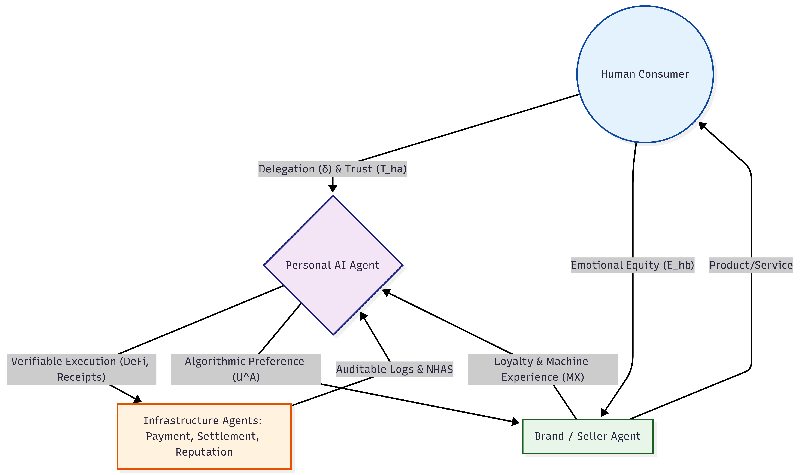
As artificial intelligence (AI) evolves, so too does the nature of consumer relationships with brands. A groundbreaking paper by Sai Srikanth Madugula and colleagues introduces the Dynamic Verifiable Multi-Agent Human Agentic Loyalty Loop (DVM-HALL) model. This new framework reshapes our understanding of loyalty in the age of "machine customers," moving beyond traditional metrics to encompass the complexities of AI-driven commerce.
The Shift from Humans to Machines
The rise of agentic AI—intelligent systems capable of making autonomous purchasing decisions—challenges the conventional notion of consumers as solely human entities. Today, AI agents, including bots and automated systems, are authorized to execute commercial transactions, dramatically transforming how brands engage with consumers.
The DVM-HALL model recognizes this shift, adapting loyalty strategies to account for both human emotional connections and the unique decision-making processes of machine customers. The authors argue that traditional loyalty models simply do not capture the intricacies of algorithmic decision-making, leading to a call for a more dynamic approach.
Understanding DVM-HALL: The Mechanics Behind Loyalty
The DVM-HALL framework articulates a comprehensive mechanism for brand choice that synthesizes human emotional equity, machine experience, trust calibration, and recorded outcomes. The model uses a complex formula that incorporates various factors affecting consumer decisions, such as execution risks inherent in decentralized finance (DeFi) environments, which are critical predictors of brand preference.
At the heart of this framework is the Net Human-Agent Score (NHAS), a metric developed to measure the alignment between the human element and AI agents in shopping scenarios. This score considers multiple inputs, including human feedback and the reliability of agent actions, creating a more nuanced view of loyalty that can adapt in real-time.
Why NHAS Matters in Today’s Market
The NHAS diverges from traditional measures like the Net Promoter Score (NPS), which often fails in contexts involving AI agents as primary decision-makers. NHAS addresses this gap by utilizing auditable data to evaluate human-agent interactions and capturing both optimal performance and the consequences of potential failures.
In a world where consumers are frequently bombarded with choices from AI, understanding these dynamics can lead to more effective brand strategies. The NHAS equips businesses with a tool to measure their influence directly and optimize for consumer loyalty.
The Need for New Governance Structures
With AI taking a more prominent role in customer interactions, the implications of trust and oversight become paramount. The paper emphasizes the importance of governance structures that ensure responsible AI use, highlighting how mismanaged trust can lead to consumer backlash.
The proposed governance frameworks aim to maintain trust through transparency and accountability, ensuring that both human and machine agents can operate efficiently within the evolving market landscape.
Concluding Thoughts
The DVM-HALL model and NHAS metric herald a new era in understanding customer loyalty. As brands navigate the complexities of AI-driven commerce, adopting these innovative frameworks will be crucial for success. By integrating human emotional depth with machine efficiency, businesses can create more robust and responsive loyalty programs that resonate across both human and machine customers.
This research paves the way for future studies that will explore the practical applications of these models, potentially reshaping the landscape of consumer relationships in the digital age.
Authors: Sai Srikanth Madugula, Peplluis Esteva de la Rosa, Daya Shankar




