
Revealing the Dynamics of Life: A Revolutionary Criterion for Active Turbulence in Bacterial Systems
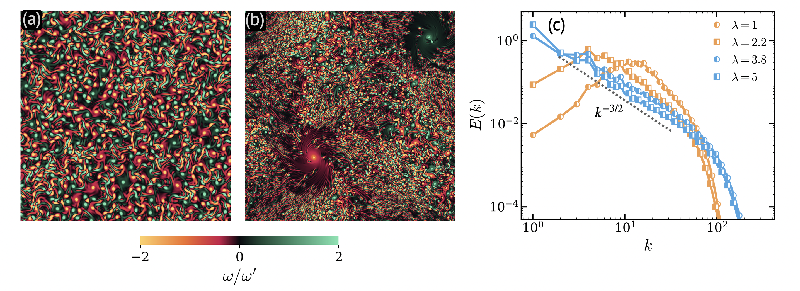
In a groundbreaking study, researchers from the International Centre for Theoretical Sciences and various Indian Institutes of Technology have delved deep into the fascinating realm of active turbulence, particularly as seen in dense suspensions of self-propelled bacteria. Their paper introduces a Reynolds-like criterion that not only predicts the onset of universal active turbulence but also offers new insights into the mechanisms driving chaotic flows in living systems.
What is Active Turbulence?
Active turbulence refers to the chaotic motion generated by self-propelled entities, such as bacteria, that continuously create and destroy vortex-like structures without the influence of inertial forces. As research continues to uncover universal behaviors among these dynamic systems, understanding the collective properties of their motion becomes crucial. This study addresses a fundamental question: what dictates the transition to universal active turbulence?
Key Findings: A Unified Control Parameter
The authors reveal that universal active turbulence can emerge not just through increased activity but also by tweaking other factors like nonlinear advection (the movement of fluid driven by its own dynamics), nonlinear saturation, or even by adjusting fundamental instabilities in the flow. By identifying dimensionless groups that govern these dynamics, the researchers constructed a unified parameter—akin to the well-known Reynolds number in fluid mechanics—that captures the essence of this transition.
The Magic of Dimensionless Combinations
Through extensive experimentation and modeling, the study shows how different paths can lead to the same chaotic regime. For instance, increasing the active driving force yields results similar to those achieved by either enhancing nonlinear advection or reducing nonlinear saturation. This remarkable finding indicates that the onset of turbulence can be universally predicted using one critical dimensionless parameter, which simplifies the complexity usually associated with active matter.
Implications Beyond Bacterial Systems
This new understanding of active turbulence not only aids in comprehending bacterial swarming and movement patterns but also has implications for various active materials like living cells and synthetic self-propelled systems. By applying the proposed criterion, scientists may be able to draw parallels across different biological and physical contexts, enhancing our understanding of collective behavior in complex systems.
Conclusion: The Path Forward
The findings from this research herald a new era in studying active matter, suggesting that despite operating in regimes often deemed negligible in inertia, such systems follow organizing principles comparable to classical fluid dynamics. As researchers continue to explore dimensionless criteria in other systems, a broader classification of universal active flows may emerge, paving the way for innovations in fields ranging from biophysics to materials science.
Authors: {Kunal Kumar, Sandip Sahoo, Kirti Kashyap, Amal Manoharan, Siddhartha Mukherjee, Anupam Gupta, Samriddhi Sankar Ray}


