
Revolutionary Behavior Architecture: How Humanoid Robots Master Complex Tasks with Unmatched Speed and Flexibility
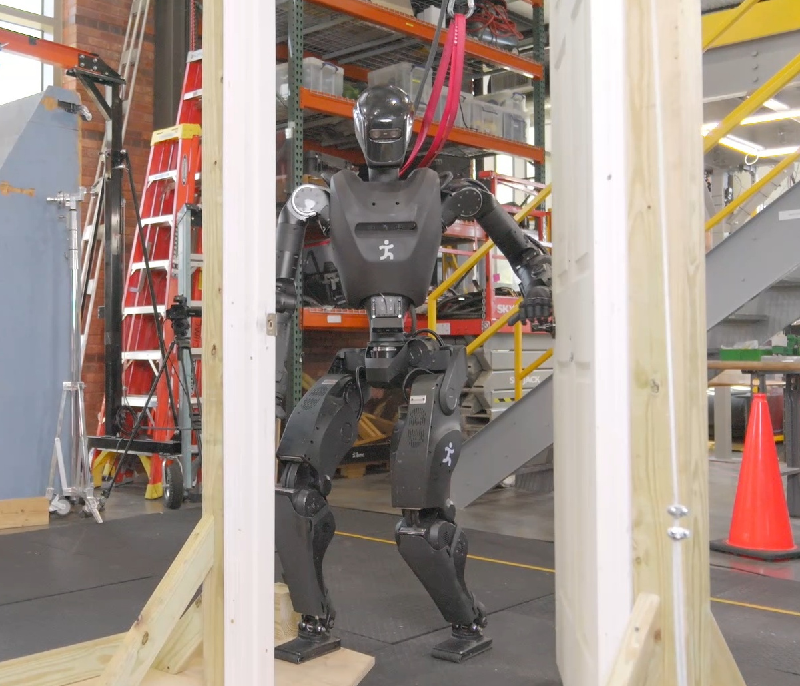
In the realm of robotics, humanoid robots are making significant strides, especially in performing intricate tasks in environments designed for humans. A groundbreaking research paper by Duncan Calvert and colleagues introduces an innovative behavior architecture that empowers humanoid robots to adapt swiftly to various tasks while ensuring resilience and reliability. This study, published in the IEEE Transactions on Robotics, tackles the challenges of humanoid loco-manipulation and offers a runtime-editable, robot-local behavior authoring system.
The Challenge of Humanoid Robotics
Humanoid robots are increasingly being deployed to tackle hazardous, repetitive, and physically demanding jobs in human-centric environments. However, these robots must navigate complex tasks involving coordination of locomotion, perception, contact, and operator supervision. To address these multifaceted challenges, the research proposes a behavior architecture that facilitates rapid, adaptable humanoid behaviors—making it a significant advancement in the field.
A Closer Look at the Behavior Architecture
The core of this research lies in a behavior architecture that combines several key components: object-centric Affordance Templates for reusable tasks, a tree structure for task organization, and dynamic perception capabilities. This system allows for real-time editing, enabling operators to create, adapt, and extend behaviors on the fly. Such runtime-editability significantly reduces the time required for task adaptation, with some behaviors developed in mere hours.
Performance that Speaks Volumes
The authors presented several demonstrations using humanoid robots such as Unitree H1-2 and Alex. One notable accomplishment is the execution of a push-door traversal in just 34 seconds and sorting six colored balls in 45 seconds, even amidst human-induced disturbances. This level of performance is among the fastest reported in the literature for similar tasks, showcasing the architecture's effectiveness and speed.
Breaking New Ground in Task Adaptation
The study also emphasizes the architecture's adaptability, evidenced by the rapid authoring sessions observed during tests. For instance, an operator was able to take a new door traversal behavior from concept to full autonomous execution in under two hours. This adaptability is instrumental not only for efficiency but also for expanding the robots' range of capabilities as they encounter new challenges in various environments.
Comparison to Previous Efforts
When compared to traditional systems and prior studies, Calvert et al.'s approach emerges as a frontrunner. The architecture allows the robot to handle door traversals and other complex tasks with impressive speed and reliability, outpacing many learned systems while maintaining the robustness required for intricate human environments. The authors argue that the integration of engineered solutions with learned systems could further enhance capabilities in the future.
Conclusion: A Step Towards Autonomous Robots
The research by Calvert and his team marks a significant advancement in humanoid robotics by introducing a behavior architecture that embodies speed, resilience, and adaptability. As the technology continues to evolve, it blurs the line between machine and human-like performance in robotic systems, paving the way for a future where robots can seamlessly assist in everyday tasks.
As we move forward, this work will undoubtedly inspire further innovations, providing a robust foundation for the next generation of humanoid robots capable of enhancing human productivity in challenging environments.




