
Revolutionizing Analog Circuit Design: Meet SPECS, the Evolutionary Algorithm that Outperforms Traditional Methods!
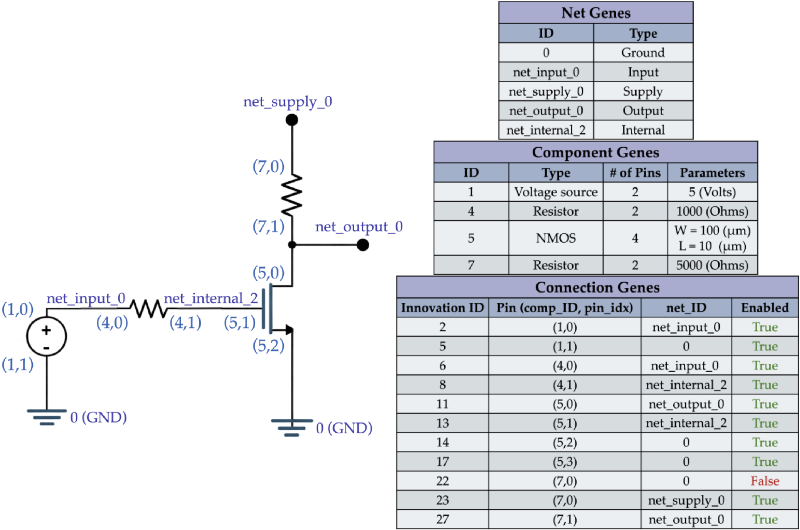
In an era where technology is evolving at breakneck speed, designing efficient analog circuits remains a complex and time-consuming task, traditionally reliant on expert knowledge. However, a groundbreaking research paper introduces SPECS, a novel genetic algorithm that promises to automate analog circuit synthesis through innovative techniques inspired by artificial intelligence.
What is SPECS?
SPECS stands for Speciated Evolutionary Circuit Synthesis, a methodology developed by researchers from Sony Group Corporation and several prestigious universities. The primary objective of SPECS is to automate the synthesis of analog circuits while optimizing both topology and component sizing simultaneously. This integration not only makes the process faster but significantly improves the quality and reliability of the resulting circuits.
Inspired by NEAT
The design principles of SPECS draw inspiration from the NeuroEvolution of Augmenting Topologies (NEAT), an established algorithm predominantly used for developing neural networks. By adapting NEAT’s core concepts, such as incremental topology growth and speciation, SPECS effectively transfers these algorithms to the more complex realm of analog circuit design, which presents unique challenges like non-convex search spaces and strict physical constraints.
The Genius of Speciation
One of the standout features of SPECS is its use of speciation, a strategy that preserves the diversity of potential designs. By grouping similar circuit candidates into distinct species, SPECS minimizes the premature elimination of innovative solutions, allowing for a broader exploration of the design space. This approach helps ensure that promising new structures are given a chance to evolve and prove their worth in functionality.
A Breakthrough in Performance
The results of the evaluation conducted with SPECS are impressive. It consistently outperformed traditional methods across several computational tasks, including squaring, cubing, square root, and cube root functions. The findings showcase how SPECS not only produces high-quality circuits but also does so with remarkable reliability—a stark contrast to existing methods which often falter under similar conditions.
Why Does This Matter?
The implications of adopting SPECS for analog circuit design are profound. As hobbyists and industry professionals alike search for more efficient design solutions, SPECS opens the door to a future where automated design processes are not just an aspiration but a reality. With customizable capabilities, SPECS can be adapted to a wide range of circuit types, making it a versatile tool for automated analog design.
Conclusion: A New Era for Circuit Designers
With SPECS, the days of tedious manual circuit designs might be numbered. Its innovative use of genetic algorithms not only streamlines the design process but also leads to high-performance circuits that can meet the demands of modern electronics. The stage is set for SPECS to redefine how we approach analog circuit synthesis, making it an exciting prospect for engineers and innovators in the field.
As we stand on the brink of this technological revolution in circuit design, it’s clear that SPECS is not merely an incremental improvement—it represents a foundational shift in how we conceive, design, and implement complex electronic systems.
Authors: Yağız Gençer, Stefan Uhlich, Andrea Bonetti, Arun Venkitaraman, Chia-Yu Hsieh, Lorenzo Servadei




