
Revolutionizing Aneurysm Treatment: The Breakthrough in Contact-Resolved Deployment of the Contour Neurovascular System
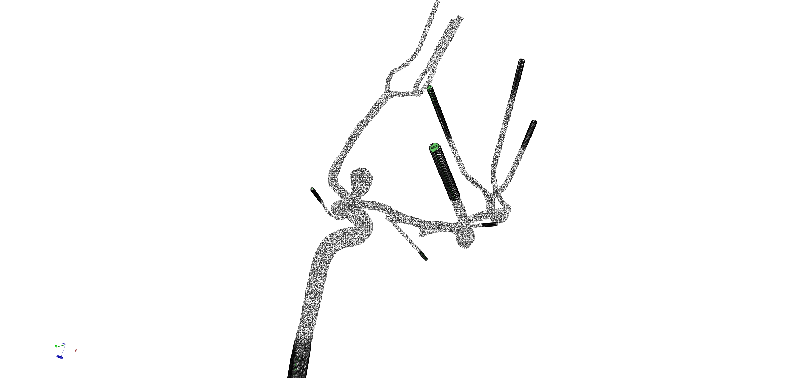
New research from a team of experts explores a groundbreaking method for treating intracranial aneurysms, a condition that can cause severe health complications if left untreated. The study presents an innovative approach employing the Contour Neurovascular System (CNS), which promises to optimize the deployment mechanics of aneurysm treatment devices.
The Challenge with Current Treatments
Intracranial aneurysms often remain undetected until they rupture, leading to significant morbidity and mortality. Traditional treatment methods, such as coiling and flow diverters, are designed to manage complex cerebrovascular structures but often fall short due to oversimplified computational models. These models typically ignore the intricate mechanics involved in deploying these devices, which can misrepresent their effectiveness.
Introduction of Patient-Specific Modeling
The researchers focused on developing a contact-resolved finite-element framework that accurately simulates how the CNS interacts within the unique vascular environment of each patient. By considering essential biomechanical features like neck coverage and migration resistance, this new approach significantly enhances the accuracy of deployment.
Why Deployment Mechanics Matter
Understanding the deployment mechanics is crucial for achieving stability and efficacy in treating aneurysms. The study reveals that the mechanics of placement—how the device contacts the aneurysm wall and adapts to its shape—are highly variable and dependent on patient-specific conditions. This variability impacts how well the device can anchor itself, ensuring effective treatment and reducing the risk of complications.
Key Findings
The researchers discovered that the deployment outcome is sensitive to several factors, including:
- Tangential Slip Resistance: High resistance can enhance anchoring but limit flexibility.
- Vertical Release Depth: Where the device is deployed from significantly affects its final resting position within the aneurysm.
This new methodology emphasizes the importance of developing individual treatment plans rather than relying on standardized approaches that may compromise patient safety.
The Future of Aneurysm Treatment
As the study paves the way for more personalized and precise treatment options, it calls for further investigations into how these models can be incorporated into clinical practice. Future research aims to combine deployment mechanics with hemodynamic analysis, offering a comprehensive understanding of how treatments affect blood flow and contribute to thrombus formation.
Conclusion
This study marks a significant advancement in endovascular treatment for intracranial aneurysms. By focusing on patient-specific deployment mechanics, researchers have established a potential foundation for future developments in this critical area of medical intervention.
Authors: Ratnadeep Pramanik, Fina Gießler, Martin Frank, Ivo Steinbrecher, Matthias Mayr, Sylvia Saalfeld, Alexander Popp




