
Revolutionizing Cell Manipulation: How a Viscoelastic Theory is Unleashing the Power of Ultrasound
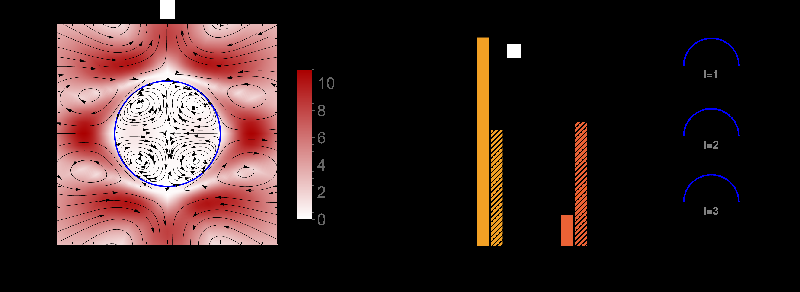
A groundbreaking study proposes a new viscoelastic theoretical framework for understanding ultrasound-induced intracellular streaming, which could dramatically enhance how we manipulate biological cells. The research, conducted by Niels Gieseler, Falko Ziebert, and Ulrich S. Schwarz from prestigious institutions in Germany, outlines a semi-analytical model capable of predicting flow patterns and energy distributions within cells subjected to ultrasound.
The Power of Ultrasound in Biology
Ultrasound is widely recognized for its role in medical imaging, but its potential extends far beyond visualization. In recent years, researchers have harnessed ultrasound technology to control biological cells for various applications, including drug delivery, cell stimulation, and even gene expression through innovative methods like sonogenetics. However, deciphering the complex mechanics of how ultrasound interacts with cells has remained a significant challenge.
A New Viscoelastic Framework
The proposed theory treats cells as viscoelastic droplets suspended in a surrounding fluid. By solving the momentum equations with an Oldroyd-B constitutive law, the authors developed a model that considers the cells' unique mechanical properties. This allows for a more accurate prediction of the acoustic streaming flows that occur inside and around cells when exposed to ultrasound.
Key Findings: Flow Patterns and Energy Distribution
The researchers discovered a series of flow reversals linked to how energy is distributed into various modes. The model reveals that changes in ultrasound frequency and the viscoelastic properties of the fluid can shift these transitions, introducing new flow dynamics essential for effective cellular manipulation. This insight is crucial for applications in drug delivery, where controlling fluid flow can enhance the uptake of therapeutic agents.
Implications for Future Technologies
The study's findings may pave the way for advanced biomedical techniques, such as non-invasive drug delivery systems that intelligently react to ultrasound. Moreover, understanding intracellular streaming could open avenues in regenerative medicine, enhancing the body's healing processes through focused ultrasound treatment.
Towards More Effective Cellular Control
With the potential to revolutionize how we perceive and interact with biological systems, this research highlights the importance of integrating theoretical models with experimental practices. The mathematical results derived from this work could serve as a guiding framework for future experiments aimed at fine-tuning the manipulation of cellular behaviors through ultrasound.
The authors of this pioneering study believe that the insights gained could enable researchers to explore and engineer new techniques for manipulating cell behavior, ultimately leading to more effective diagnostic and therapeutic options in medicine.
Authors: Niels Gieseler, Falko Ziebert, Ulrich S. Schwarz




