
Revolutionizing Clinical Diagnosis: The Power of Ranking-Aware Prompt Optimization!
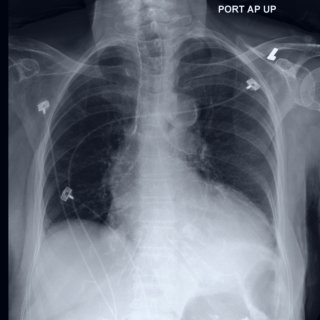
In the field of clinical diagnosis, the integration of Multimodal Large Language Models (MLLMs) has shown tremendous potential. However, traditional approaches often optimize for accuracy, which can be misleading in contexts where class imbalances exist. A recent research paper by Tian Xia and colleagues introduces a groundbreaking method called Ranking-Aware Prompt Optimization, which emphasizes ranking metrics over mere accuracy, claiming substantial improvements in diagnostic effectiveness.
The Challenge with Traditional Accuracy Metrics
One of the major issues highlighted in the study is that conventional accuracy metrics can be deceiving, particularly in clinical settings where the data is often heavily skewed. For instance, a model can achieve over 90% accuracy by predicting the majority class without effectively identifying positive cases. This poses a risk in clinical scenarios where missing a diagnosis could have serious implications.
The authors argue that a more suitable metric is the Area Under the Receiver Operating Characteristic (AUROC), which is a threshold-free score that assesses a model's ability to rank positive cases higher than negative ones. This metric is invariant to class balance, allowing for a more reliable evaluation of diagnostic capability.
Introducing the Pair-Level Pareto Prompt Evolution
To address the shortcomings of existing methods, the researchers propose what they call Pair-Level Pareto Prompt Evolution (Ranking-PE). This innovative methodology shifts the focus from instance correctness to a pairwise comparison between positive and negative instances. Instead of simply measuring correct answers, it evaluates how well a model ranks a positive case compared to a negative one. This approach theoretically allows the optimization process itself to be aligned with the relevant clinical diagnosis objectives.
By employing this method, the researchers discovered a significant uplift in AUROC scores across various diseases when using Ranking-PE compared to traditional accuracy-based prompt evolution.
Experimental Findings
The research utilized a substantial dataset derived from the MIMIC-IV database, focusing on three specific diseases: Atelectasis, Cardiomegaly, and Consolidation. Through rigorous experimentation, it was found that Ranking-PE consistently outperformed traditional accuracy-based methods, achieving AUROC gains of +5.8 percentage points and +16.2 percentage points in different model configurations.
The findings thus underscore the importance of employing ranking-aware techniques in clinical decision-making, particularly in imbalanced datasets characteristic of real-world medical scenarios.
A Vision for Future Clinical Applications
This advancement in prompt optimization represents a significant step towards enhancing the capabilities of AI in clinical environments. By ensuring that MLLMs are not only accurate but also proficient at ranking critical diagnoses, healthcare professionals can harness these tools for better patient outcomes. The approach detailed in this study is not just beneficial for existing medical applications but suggests a pathway for future innovations in diagnostic AI, ensuring that clinical decisions hinge on appropriately ranked evidence rather than sheer prediction numbers.
Ultimately, the research by Xia and colleagues marks a pivotal moment in the evolution of clinical AI systems—one that could lead to more reliable, efficient, and clinically valuable tools for healthcare practitioners around the globe.
Authors: {Tian Xia, Minghao Liu, Yiqing Liang, Laixi Shi, Jiayun Wang}


