
Revolutionizing Data Augmentation: Unveiling the Unseen Risks in Generative Approaches
In the ever-evolving realm of machine learning, data accuracy is vital for achieving reliable classification results, particularly in the face of class imbalance. A recent research paper by Chathurika S. Abeykoon, Mathias N. Muia, and Mallory Goldstein shines a new light on the growing significance of generative data augmentation through a rigorous examination of its theoretical foundations and empirical applications.
The Challenge of Class Imbalance
Class imbalance is a persistent issue in supervised learning, where some categories are significantly underrepresented in datasets. This discrepancy often leads to biased decision-making by algorithms, as they favor majority classes. Traditional mitigation strategies, such as reweighting or oversampling, have proven somewhat effective but fail to fully grasp underlying class-specific distributions.
The Promise of Generative Models
Generative models, particularly Generative Adversarial Networks (GANs), present an innovative solution by learning to mimic the entire data distribution and generating new samples from the minority classes. However, the effectiveness of these approaches has frequently been evaluated primarily by their predictive accuracy rather than the quality of generated distributions. This is where the recent work by Abeykoon and colleagues adds critical insight.
An Analytical Framework: Wasserstein Metrics
The researchers develop a robust statistical framework using Wasserstein distances to quantify the reliability of generative augmentation. This method allows for a more nuanced understanding of how discrepancies between real and generated data impact classification risk. In essence, they formalize augmentation as a distribution-mixing process, connecting augmentation strength and the quality of generated data with downstream classification results.
Key Findings: Fidelity vs. Predictive Utility
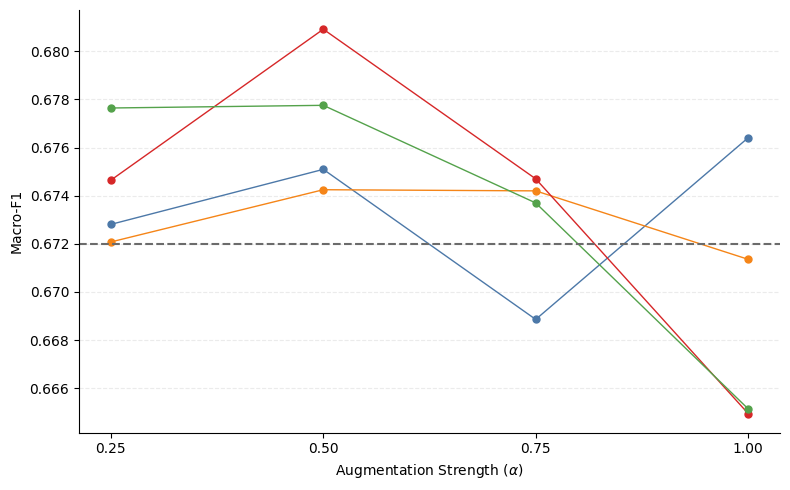
Through empirical evaluations on various datasets, including binary and multiclass imbalanced tasks, the study reveals a thought-provoking reality: improvements in distributional fidelity, as indicated by lower Wasserstein discrepancies, do not automatically translate into enhanced classification performance. While Conditional Wasserstein GANs (CWGAN-GP) outperformed their Conditional GAN (CGAN) counterparts in terms of generating high-fidelity data, they did not outperform classical oversampling techniques like SMOTE when it came to predictive accuracy.
Implications for Future Augmentation Strategies
This research strongly suggests a paradigm shift in how synthetic data generation should be approached. The findings emphasize the necessity of evaluating augmentation reliability through distributional metrics rather than relying solely on predictive outcomes. As a takeaway, machine learning practitioners should consider adopting more comprehensive assessment strategies that incorporate both distributional fidelity and predictive performance when leveraging generative models for data augmentation.
Conclusion: A New Era for Generative Data Augmentation
The work done by Abeykoon, Muia, and Goldstein sets a new benchmark in understanding generative augmentation reliability, elucidating the complexities behind synthesizing minority-class data. By unearthing the interplay between distributional fidelity and classification performance, this study lays the groundwork for future explorations into how generative techniques can be fine-tuned to answer the ongoing challenges posed by class imbalance in machine learning.
As we continue to refine these methods, one thing remains clear: the potential for generative models goes beyond mere classifier improvements, calling for a deeper conceptual understanding of data quality and usability in various applications.
Authors: {Chathurika S Abeykoon, Mathias Nthiani Muia, Mallory Goldstein}




