
Revolutionizing Indoor Connectivity: The Breakthrough in Data-Driven 5G gNB Placement Optimization
The deployment of fifth-generation (5G) mobile networks, especially in indoor environments, presents a unique challenge—how to ensure deep and reliable wireless coverage while navigating structural obstacles like walls and furniture. A recent research paper explores an innovative approach to optimize the placement of next-generation NodeBs (gNBs) in indoor 5G testbeds, leveraging a data-driven methodology. This study not only highlights the importance of accurate radio planning but also opens new avenues for achieving stellar wireless performance where it matters most.
The Challenge of Indoor Wireless Networks
Indoor environments complicate radio signal propagation due to physical barriers. While existing standardized models can help predict signal behavior, they often fail to accurately represent unique architectural features of specific locations. This limitation necessitates a more personalized approach based on real-world measurements, prompting the authors to embark on a measurement-driven optimization study.
Ground-Breaking Methodology: How It Works
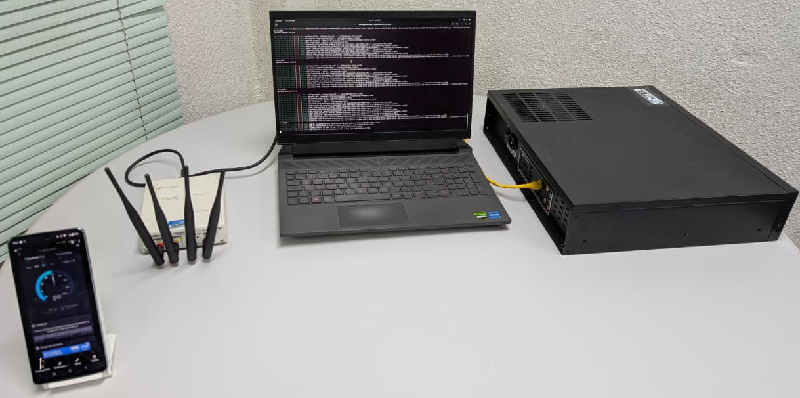
The paper details a case study that evaluates the optimal placement of gNBs in an office environment using actual signal measurements. The researchers employed a private 5G testbed, gathering data to train a propagation model based on LightGBM, a powerful machine learning algorithm. By using the distance between the gNB and user equipment (like smartphones) along with the number of walls the signal must travel through, the model can predict the strength of the signal at various points without reliance on absolute gNB coordinates.
Innovative Results: Maximizing Coverage vs. Minimizing Weak Signals
Through a systematic evaluation of deployment strategies, two distinct optimization criteria emerged: coverage maximization and max-min signal optimization. Coverage maximization aims to maximize the area served by the network, while max-min optimization focuses on improving service for users at the edges of coverage areas. The paper's findings reveal that both strategies yield different placements, demonstrating a fundamental trade-off between expansive coverage and maintaining a reliable connection for those furthest from the gNBs.
Significant Findings: The Practical Implications
The study showcased that a small number of gNBs could achieve satisfactory indoor coverage under both criteria. For example, when optimizing for maximum coverage, gNBs were positioned in open areas of the office, while the max-min optimization placed them more strategically to ensure stronger signals in challenging regions. This nuanced understanding can help businesses and organizations effectively plan their internal 5G environments, ensuring that operations and communications run smoothly.
A Vision for Future Indoor Deployments
As enterprises continue to adopt private 5G networks for enhanced connectivity, the approaches identified in this research could significantly influence how these networks are designed. The ability to tailor network configurations according to specific operational objectives could enhance overall user experiences, whether in bustling office environments or settings that require uninterrupted connectivity.
In conclusion, the research not only provides a framework for optimizing gNB placement but also paves the way for future advancements in the deployment of indoor wireless networks. By embracing data-driven approaches combined with machine learning, the exploration of wireless communications may soon reach new heights.
Authors: Diogo de O. Soares, Victor F. Monteiro, Fco. Rodrigo P. Cavalcanti, Vicente A. de Sousa Jr., J. Pedro B. Lima




