
Revolutionizing Industrial Automation: The Breakthrough in Dexterous Manipulation with AI
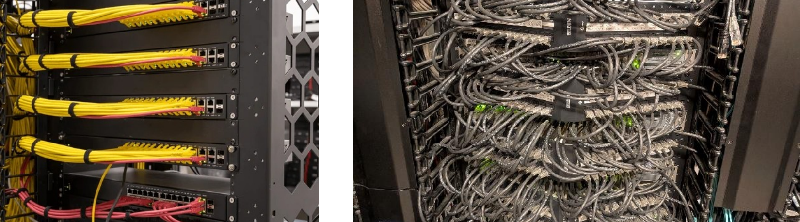
In a world where industry demands seamless automation, the challenge of dexterous manipulation remains daunting. Tasks like cable routing, connector insertion, and precision assembly often rely on manual labor, showcasing a significant gap in current robotics capabilities. A recent innovative study led by Honglu He and colleagues introduces a pioneering approach: the Industrial Dexterity Benchmark (IDB), which aims to overcome these challenges and transform how robots operate in complex industrial environments.
The Current Challenge: Manual Labor in Robotics
Despite decade-long advancements in robotics, many essential industrial tasks still require human intervention due to their complex and nuanced nature. For instance, in datacenter environments, where space is limited, and setups are intricate, even simple tasks can become labor-intensive and prone to error when handled by traditional robotic systems. The team's research uncovers that existing classical methods are often inadequate, brittle, and require significant reprogramming for even minor task adjustments in real-world scenarios.
Introducing the Industrial Dexterity Benchmark
The team developed the IDB, which comprises three specialized boards designed to simulate real-world industrial challenges: datacenter cable management, automotive cable harnesses, and gearbox assembly. These benchmarks serve as practical settings for evaluating and developing robotic capabilities, pushing the boundaries of what automated systems can achieve in dexterous manipulation.
Each board is optimized for specific tasks, with testing focusing on the cable cleaning and re-insertion challenge, a significant hurdle in datacenter operations. The findings revealed that by integrating AI with an end-to-end multimodal imitation-learning framework, robots can perform these complex tasks more efficiently.
The Power of Multimodal Learning Frameworks
At the heart of this research lies the innovative DAG-ROS framework, which seamlessly ties together teleoperation and real-time robotic control. This infrastructure allows for rapid data collection while enabling robotic systems to learn from a minimal number of demonstrations—approximately 100 per task phase. By utilizing multimodal diffusion policies, which combine different sensory inputs—including RGB images, point clouds, joint states, and wrist sensor data—the robots exhibited significant robustness and adaptability in various task scenarios.
Impressive Results: A Leap Forward in Success Rates
The results of the study are promising: the best-performing configuration using a multimodal expansion achieved a 78% success rate in grasp and insertion tasks, a notable improvement from the baseline of 36%. This advancement showcases the potential of AI in transforming industrial automation—demonstrating that robots equipped with the right policies can outperform traditional methods drastically.
Moreover, the research suggests that using diverse sensory input dramatically boosts performance, particularly in environments where precision is critical, such as during connector insertion tasks in tightly packed datacenters.
Future Directions and Implications
This groundbreaking work not only highlights the feasibility of incorporating advanced AI in industrial manipulation but also sets a foundation for ongoing research. Future efforts will focus on refining algorithms, enhancing sensory capabilities, and addressing robustness in diverse real-world applications. The IDB benchmarking platform is now open-source, facilitating further exploration and development in the field.
As the industry moves towards increased automation, findings from this study indicate that implementing advanced robotic solutions is crucial for reducing reliance on manual labor, ultimately leading to increased efficiency and productivity in complex environments.
Conclusion: Preparing for an Automated Future
The efforts put forth by He and his colleagues signal a promising horizon for automation in manufacturing and industrial settings. With systems like IDB and DAG-ROS, the dream of highly capable, autonomous robots working alongside humans in complex environments is inching closer to reality. As these technologies evolve, the fabric of industrial labor may be forever changed, ushering in an era where robots tackle even the most dexterous of tasks with ease.
Authors: Honglu He, Jacob Laufer, Zhiwu Zheng, David Elkan-gonzalez, Raman Goyal, Xinyi Li, Su Lu, Mishek Musa, Berke Saat, Nicolas Tan, Colm Prendergast




