
Revolutionizing LiDAR Technology: A New Evaluation Protocol for Real-World Autonomous Systems
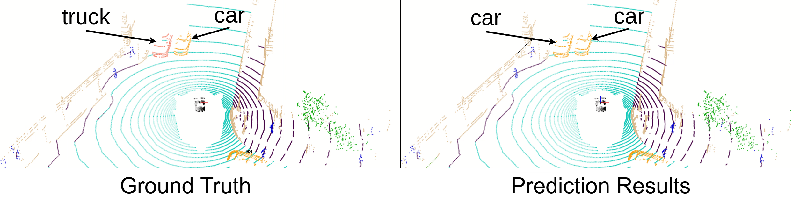
In a groundbreaking study, researchers have unveiled a novel evaluation protocol designed to enhance the deployment readiness of LiDAR-based semantic segmentation models, which are essential for the safe navigation of autonomous vehicles and mobile robots. This work highlights a critical gap in the existing assessment processes that often overlook the complexities inherent to real-world environments.
Understanding LiDAR Semantic Segmentation
LiDAR (Light Detection and Ranging) technology captures precise 3D representations of surroundings, enabling autonomous systems to comprehend intricate outdoor landscapes. Semantic segmentation is a crucial function within this framework, where each point in a scanned area is labeled to help differentiate between vital elements such as pedestrians, vehicles, and infrastructure. Traditional evaluation methods heavily rely on clean data and fine-grained labels, failing to account for real-world challenges that these technologies must overcome.
The Need for a Comprehensive Evaluation Protocol
The research underscores that while many models perform excellently on established benchmarks, they can falter dramatically under real-world conditions that involve label ambiguity, sensor distortions, or cross-domain variability. To address this shortcoming, the authors propose a three-pronged evaluation approach:
- Coarse-label Evaluation: This aspect measures the models against broader safety-related categories rather than exact fine-grained class labels, reflecting more relevant operational scenarios for autonomous driving.
- Robustness Assessment: The study systematically tests the models against various synthetic LiDAR corruptions, including atmospheric conditions like fog and rain, as well as geometric anomalies such as motion blur.
- Domain Generalization Evaluation: This part evaluates the model's adaptability to new datasets without the need for further training, capturing the essence of performance consistency across diverse environments.
Key Findings and Implications
The results derived from applying this comprehensive evaluation protocol reveal stark discrepancies between standard benchmark performances and actual deployment readiness. For instance, models that excelled in structured academic tests did not always succeed under real-world scenarios, particularly in critical areas such as identifying vulnerable road users. Furthermore, robustness to corrosive conditions and adaptability across differing datasets were found to be lacking across multiple models.
This study ultimately aims to persuade developers to reconsider existing benchmarks and emphasizes the importance of addressing real-world complexities in LiDAR semantic segmentation models. It provides a reference framework designed to spur further advancements in model design, paving the way for more reliable and effective autonomous systems.
Conclusion: Bridging the Gap to Reality
This innovative evaluation protocol is a decisive step towards ensuring that LiDAR semantic segmentation models are not only high-performing on paper but also capable of functioning safely and efficiently in unpredictable real-world conditions. By aligning technology closer with practical demands, the research sets the stage for enhanced navigational safety in autonomous vehicles and mobile robotics.
Authors: Samir Abou Haidar, Alexandre Chariot, Mehdi Darouich, Cyril Joly, Jean-Emmanuel Deschaud




