Revolutionizing Microbial Insights: How SCiFI Transforms Complex Microbiomes into Simplified Functional Groups
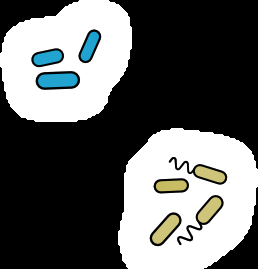
In an era where microbial communities play crucial roles in health and the environment, a groundbreaking research piece has emerged that revolutionizes our understanding of these microscopic ecosystems. The study, led by Matthew S. Schmitt and his colleagues at the University of Chicago, introduces a data-driven approach named SCiFI (Soft Clustering Function Informed), which promises to simplify the complexity of microbiomes into interpretable functional groups.
The Importance of Microbiomes
From the soil beneath our feet to the intricate networks within our gut, microorganisms are responsible for essential functions that include carbon sequestration and immune regulation. Their interactions constitute a complex web, making it challenging to trace specific functionalities back to distinct microbial contributions. This complexity is particularly pronounced given that traditional methods often require exhaustive experimental setups to isolate and study individual species within these communities.
Introducing SCiFI: A Game Changer
The highlight of this research is the SCiFI algorithm, which automatically detects functional groups within microbial communities based on species abundances. What sets SCiFI apart is its capability to be function-informed, meaning it draws links between the identified groups and their actual functional roles. This innovative approach uses a combination of machine learning techniques, particularly neural networks, to take the guesswork out of microbial clustering.
How Does SCiFI Work?
At its core, SCiFI uses a soft clustering method that identifies functional groupings directly from high-dimensional abundance data. By transforming categorical cluster identities into continuous variables, the model can maintain uncertainty and apply gradient descent for optimization. This allows it not only to find sparse groups—containing only a few relevant members—but also to predict functional outcomes, significantly simplifying the mapping of structure to function in microbiomes.
Real World Applications
SCiFI has been tested across various microbiome datasets, including gut microbiomes, ocean metagenomes, and soil communities. Its results revealed intricate dynamics of nutrient cycling and metabolic interactions while substantiating earlier experimental findings. For instance, it successfully identified groups responsible for the metabolic processes linked to butyrate production in gut microbiomes, enhancing our understanding of gut health.
The Future of Microbial Research
As the study points out, SCiFI’s carefully structured approach could pave the way for future research in microbial ecology—not just in understanding microbial actions, but also in guiding targeted experiments that unearth the underlying biological mechanisms at play. Given the broad applicability of this method across different biological systems, its impact could extend far beyond microbiomes, potentially revolutionizing methods in various fields, including immunology and neurobiology.
This new leap in microbial analysis signifies a future where understanding complex biological systems becomes more attainable and provides significant insights into improving human and environmental health.

