
Revolutionizing Road Safety: How Collective Perception and 5G V2X Communication Improve Vehicle Awareness
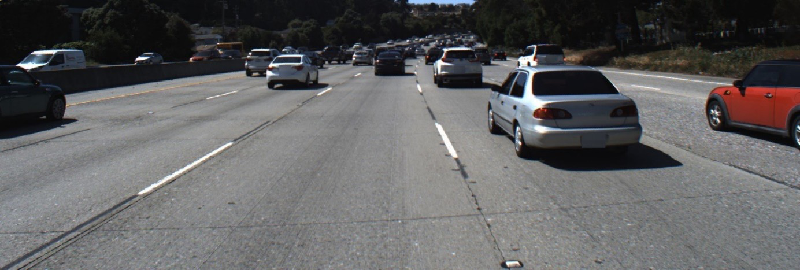
As vehicles become more connected and smart, road safety is poised for a transformative leap. A recent study titled "The Role of Collective Perception and 5G NR-V2X Sidelink in Road Safety" by a team of researchers, including Vittorio Todisco and Alessandro Bazzi, investigates how new technologies can help vehicles better understand their environment and improve safety on our roads.
The Power of Collective Perception
Collective perception refers to the ability of vehicles and infrastructure equipped with sensors to share what they see with each other through communication technologies. This approach elevates road safety efforts by allowing vehicles to convey not only their own status but also information about their surroundings. For instance, with collective perception, a car can alert others to a pedestrian in their path, even if that pedestrian is outside the vehicle's direct line of sight.
Challenges and Innovations with 5G NR-V2X
The implementation of this technology, however, is not without challenges. The study highlights that while collective perception significantly contributes to situational awareness, it can also overwhelm communication channels, particularly in densely populated areas. This increased traffic can lead to issues such as communication reliability and the effective management of information. To address these challenges, the researchers evaluated the performance of 5G NR-V2X sidelink communications, which enhances vehicle connectivity and information sharing.
Key Findings: Real-World Data Analysis
The study employed a simulation framework that analyzed real-world data from vehicles equipped with advanced sensors. This allowed for a more realistic understanding of traffic characteristics related to collective perception. The results revealed that when vehicles employ strategies prioritizing valuable information—like the proximity of a detected object—the overall efficiency of communication significantly improves, leading to better safety outcomes. By intelligently selecting which data to share, vehicles can relay critical information without clogging communication channels.
A Roadmap to Safer Future Transport
The study supports the notion that a well-designed collective perception service can minimize redundancy in data sharing while maximizing the safety benefits provided to vehicles. With ongoing standardization efforts by organizations such as ETSI, the research outlines a roadmap to realizing safer roads through cooperative driving systems. As these technologies continue to evolve and integrate, the goal of reaching zero fatalities on the roads by 2050 becomes increasingly attainable.
This research demonstrates how merging technological advancements with strategic communication methods can significantly enhance road safety, marking a pivotal step in the evolution of smart transport systems.
Authors: {Vittorio Todisco, Mattia Andreani, Maria Luisa Merani, Alessandro Bazzi}




