
Revolutionizing Robot Control: How Optimizing Prediction Metrics Could Transform Robotic Performance
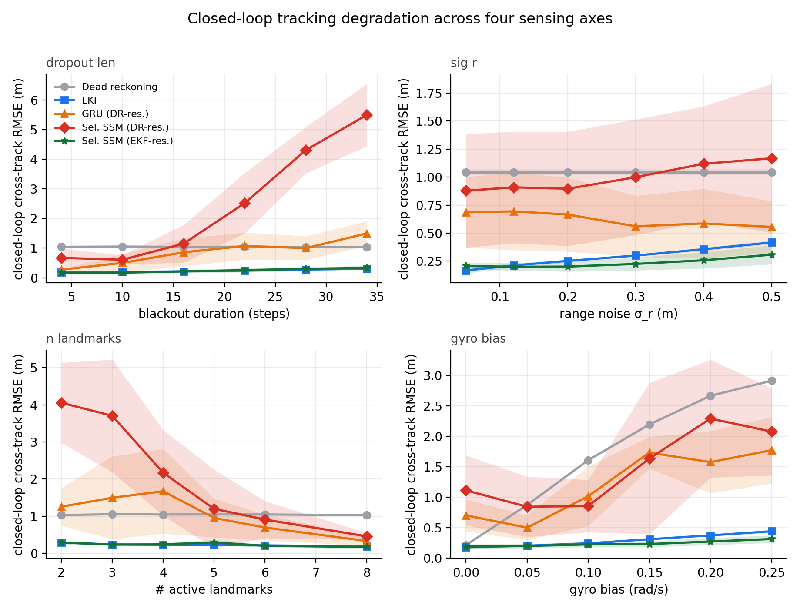
In a groundbreaking study conducted by researchers from Georgia Institute of Technology and Emory University, a critical examination of predictive models used in robotics reveals significant findings that can reshape the future of robot control and programming. The research focuses on understanding the relationship between model evaluation methods and actual robot control performance, particularly when factors like sensor data updates and trajectory errors come into play.
The Importance of Predictive Modeling in Robotics
Predictive models play a pivotal role in modern robotic systems. They help robots estimate future states, plan actions, and navigate their environments autonomously. However, these models are often tested by their ability to accurately predict state through open-loop scenarios, which may not accurately reflect real-world operations involving continuous feedback and adjustments.
This study lays bare the shortcomings of traditional evaluation methods that rely solely on forecasts without considering the complexities of robot control, particularly how frequently a robot receives new sensor data and how that data impacts decision-making.
Key Findings and Their Implications
One of the most striking findings from this research is the distinction between two common evaluation metrics: replay position root mean square error (RMSE) and measurement-free rollout error. The researchers discovered that replay position RMSE correlates significantly more closely with actual closed-loop cross-track RMSE, demonstrating a predictive capacity that better mirrors real-world robot behavior compared to the rollout metrics.
For instance, the correlation coefficient for replay position RMSE stood at an impressive 0.923, while measurement-free rollout error had a lower 0.774. This difference is crucial because it emphasizes that a predictive model's effectiveness cannot be represented merely by its ability to foresee future states without the context of real-time feedback corrections.
Optimal Evaluation Approaches for Predictive Models
The researchers advocate for a new framework in which predictive model evaluations are tailored to reflect the conditions under which robots operate. Specifically, they recommend specifying both the prediction horizon—the timeframe over which predictions are made—and the measurement-update schedule—the frequency at which new sensor data is incorporated. This approach ensures that predictive models are evaluated in a manner that is consistent with their deployment conditions.
Additionally, the study indicates that training models under varying sensing conditions can enhance robustness. Longer exposure to potential sensing outages during model development showed improvements in some architectures, but not uniformly across all types of models. This finding highlights the nuanced interactions between model architecture, training data distribution, and operational sensing conditions.
Conclusions for Future Robotics Innovations
The implications of this research are manifold. By refining how predictive models are evaluated and ensuring those evaluations align closely with real-world applications, researchers and engineers can enhance robotic performance in navigation, manipulation, and various other operational tasks. The study reinforces the notion that understanding the feedback mechanism inherent in robotics is essential to the advancement of more sophisticated and capable autonomous systems.
As robotics technology continues to evolve, research like this is paramount, propelling innovations that allow robots to operate safely and efficiently in increasingly complex environments.
Authors: Dharini Raghavan, Amritpal Singh




