
Revolutionizing Robot Learning: How Discriminative Barrier Functions Enable Safer Imitation from Observation
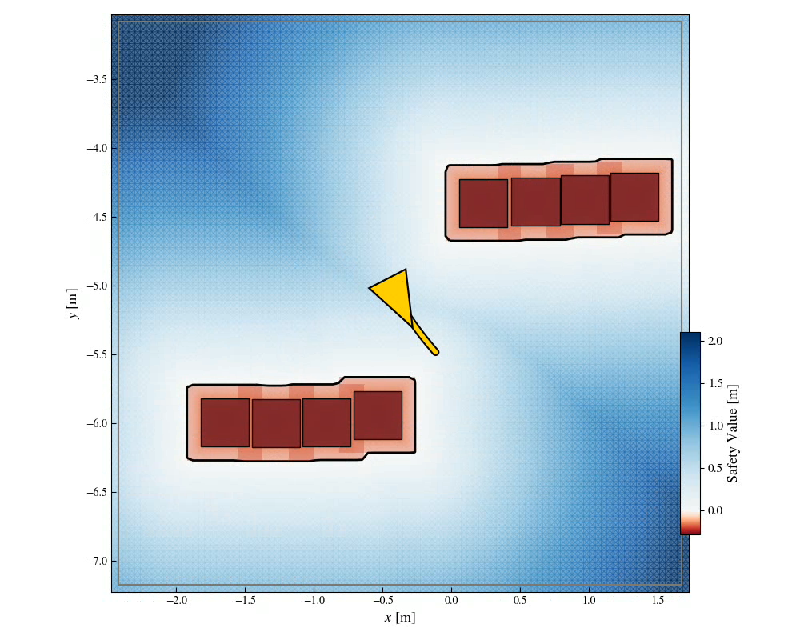
In a world where robots are tasked with increasingly complex real-world scenarios, ensuring their safety is paramount. A recent study from researchers at the University of Washington introduces Discriminative Barrier Functions (DBFs) as a groundbreaking approach that enhances the safety of robots learning from observation. By integrating Control Barrier Functions into the framework of Adversarial Imitation Learning, this research offers a novel method to improve robotic safety in environments where traditional data collection methods are limited or costly.
The Challenge of Inverse Reinforcement Learning
Inverse Reinforcement Learning (IRL) has emerged as a powerful technique for training robots by mimicking expert behavior. However, most IRL algorithms rely on access to labeled actions, which can be difficult to obtain in practical scenarios. This cumbersome need often results in potential risks during exploration phases when robots operate without the supervision needed to avoid unsafe states. The researchers address this limitation by proposing a method that leverages observational data—learning from unlabelled expert demonstrations.
Integrating Safety with Discriminative Barrier Functions
The key innovation of the study is the introduction of Discriminative Barrier Functions. Instead of exploring the entire space of potential reward functions, the framework constrains these functions to those that represent safety nets within the system. By focusing on the forward invariance property of these functions, robots can effectively maintain a boundary that defines safe operational states, thereby preventing collisions and unsafe behaviors.
This approach extends beyond traditional learning methods by allowing robots to generate barrier functions autonomously from observational data. The researchers demonstrate that these learned barrier functions can successfully identify unsafe states, even when such obstacles were never encountered during training.
Empirical Validation: Demonstrating Robustness Across Scenarios
The researchers tested their DBF-based methodology in various simulated environments. They assessed robots on their ability to navigate without colliding with obstacles that were absent during training. The results showed a significant reduction in collisions and an improved overall navigation performance compared to standard IRL methods. Notably, the experimental outcomes revealed that DBFs could generalize safety features to configurations previously unseen, marking a notable advancement in robotics.
Real-World Applications: Bridging Simulation to Physical Environments
Further testing involved deploying the learned models in physical environments with varying obstacle configurations. DBF-equipped robots demonstrated a remarkable ability to adapt and safely navigate through these scenarios without direct expert guidance, proving the efficacy of the approach in real-world settings. This ability to transfer knowledge from simulated environments to real-life applications opens up exciting possibilities for implementing safer robotic systems in everyday tasks.
Conclusion and Future Directions
The introduction of Discriminative Barrier Functions represents a promising step forward in robotic learning, enabling safe and effective imitation from observation without requiring extensive labeled input. While the results are encouraging, the study also suggests that future research could further refine these methods to enhance adaptability and performance in unknown situations. As robots continue to become integral to various sectors, ensuring their safety and reliability is crucial, and this novel approach significantly contributes to that goal.
In summary, DBFs present a paradigm shift in how robots learn from their environment, prioritizing safety while expanding their capabilities, potentially revolutionizing fields from autonomous vehicles to household robotics.
Authors: Anubhav Vishwakarma, Bhaumik Mehta, Caleb Hsu, Byron Boots, Karen Leung, Tyler Han – University of Washington




