
Revolutionizing Robotic Grasping: Meet AdaRoboVLG and Its Unique Vision-Language Approaches
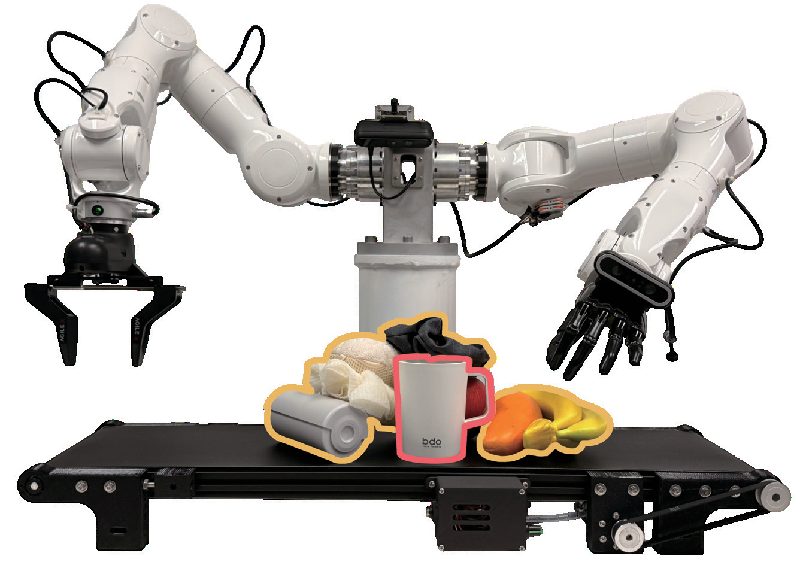
In the world of robotics, grasping objects is a fundamental skill that remains a complex challenge. A recent paper introduces AdaRoboVLG, a novel method that enhances the grasping abilities of robots through adaptive vision-language processing. This approach offers a promising solution to the limitations of traditional robotic grasping techniques, which often struggle with contextual adaptability and require extensive data to function effectively.
The Challenge of Grasping
Grasping is not just about picking up objects; it involves considering the object's surroundings, the tasks to be performed, and the robot's physical capabilities. Existing methods typically combine visual input directly with grasping actions in a way that limits their effectiveness across varying contexts. This entanglement means they aren't very adaptable when faced with new tasks or diverse environments.
Introducing AdaRoboVLG
AdaRoboVLG stands for Adaptive Vision-Language Grasping, and it addresses these challenges by decoupling task understanding from the grasp synthesis process. It uses three types of priors—spatial, cognitive, and temporal—to guide robots in making more intelligent decisions about how to grasp different objects in real-time scenarios.
This innovative framework allows the robot to leverage previous knowledge and experiences without needing to retrain the entire grasping policy each time. This shift not only increases data efficiency but significantly improves the adaptability of robotic grasping in dynamic environments.
How AdaRoboVLG Works
The underlying principles of AdaRoboVLG hinge on its structured grasp interface, which allows the synthesis of task-consistent yet physically executable grasp poses. Here's how it operates:
- Spatial Prior: Uses visual data to recognize object geometry and potential contact areas in a scene.
- Cognitive Prior: Interprets language instructions that describe the task at hand—such as "grasp the mug to pour water"—and aligns it with functional requirements.
- Temporal Prior: Tracks the movement of objects and adjusts grasp strategies in real-time, ensuring successful interaction even when the environment changes, like when objects are in motion.
Real-World Applications and Results
The power of AdaRoboVLG has been demonstrated through both simulations and real-world experiments. For instance, on cluttered surfaces, robots using this framework achieved an impressive grasping success rate of 83.3% across various trials. Moreover, it exhibited a strong ability to track moving objects and adapt grasp strategies as conditions changed, outperforming existing methods by a significant margin.
This technology holds potential in everyday applications, from home assistance to complex manufacturing tasks, where adaptability and precision are paramount.
The Path Forward
AdaRoboVLG not only revolutionizes how robots grasp objects but also sets a foundation for future advancements by providing a scalable interface that can integrate with increasingly sophisticated models. By leveraging the insights gained from this research, the field of robotic manipulation is poised to make significant strides in automation, enabling robots to more effectively support human activities in our increasingly dynamic world.
With advancements in AI and robotics continuing to evolve, frameworks like AdaRoboVLG may redefine our approach to human-robot interaction, creating brighter possibilities for technology that understands and acts upon human intentions.
Authors: Sixu Yan, Shikang Wang, Binhua Huang, Xuanlai Tang, Guohua Fan, Fan Huang, Haoxuan Li, Yongkang Li, Yuhan Li, Bencheng Liao, Zeyu Zhang, Wenyu Liu, Hangxin Liu, Xinggang Wang.




