
Revolutionizing Robotics: Meet RoboTTT, the Next-Gen Long-Context Robot Policy
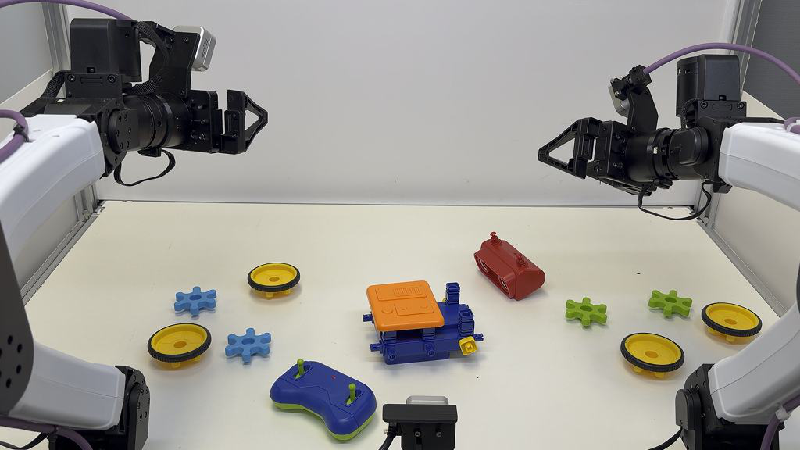
In an era where technology continuously pushes the boundaries of what's possible, the latest research from NVIDIA unveils a groundbreaking advancement in robotics: RoboTTT, or Test-Time-Training Robot Policies. This innovative model dramatically enhances the ability of robots to learn, adapt, and perform complex tasks over extended periods. With capabilities that include one-shot imitation learning and robust long-horizon task execution, RoboTTT marks a significant leap forward in the development of intelligent robotic systems.
What is RoboTTT?
RoboTTT introduces the concept of scaling visuomotor context to an impressive 8,000 timesteps—three times more than current state-of-the-art robots. This extended context allows robots to maintain a broader awareness of their actions and environment, leading to better decision-making. Unlike traditional models that operate within limited time frames and can only remember past actions in a very narrow context, RoboTTT enables robots to learn from an extensive history of actions and observations. This remarkable capability paves the way for enhanced performance in a variety of tasks.
Key Features of RoboTTT
RoboTTT is not merely an incremental improvement; it introduces several key features that redefine robotic training:
- One-Shot In-Context Imitation: The model allows robots to perfectly replicate actions from a single human demonstration video, achieving success in 6 out of 10 trials. This sets a new standard for how robots learn from human actions.
- On-the-Fly Policy Improvement: RoboTTT adapts its policies automatically during operation, allowing it to improve continuously without needing external data.
- Robustness to External Perturbations: The robot can recover from disturbances effectively—being capable of reassembling parts if they are misplaced during tasks, showcasing its resilience in dynamic environments.
Real-World Applications
The potential applications for RoboTTT are vast. Robots equipped with this advanced system can effectively handle long-term tasks such as assembly processes in manufacturing or intricate surgical procedures. For instance, in testing scenarios, RoboTTT successfully completed a complex assembly task involving multiple stages, showcasing its proficiency in intricate operations that extend beyond the capabilities of traditional robotics.
Technical Insights Simplified
At the heart of RoboTTT’s innovation is the introduction of fast weights—dynamic parameters that can be updated in real-time, allowing the robot to learn contextual information immediately from its operating environment. This contrasts with conventional models, where parameters are largely static once training is complete. Shortly put, RoboTTT combines advanced learning algorithms with regular feedback from the operational workflow, creating a more intelligible and adaptable learning environment.
The Path Ahead for Robotics
As we stand on the brink of a new era in robotics, the RoboTTT model not only illustrates the importance of long-context learning but also sets a precedent for future developments in the field. By embracing the principles of adaptability and quick learning from extended histories, RoboTTT opens doors for smarter, more effective robots. It's a clear indication that the robotics landscape is evolving, anticipating a future where machines are not just tools, but intelligent partners in various sectors.
With the capacity to learn from vast contextual histories and adapt in real time, RoboTTT is poised to redefine what we expect from robotic assistance in our everyday lives, making it a promising avenue for researchers and developers alike.
Authors: Yunfan Jiang, Yevgen Chebotar, Ruijie Zheng, Fengyuan Hu, Yunhao Ge, Jimmy Wu, Tianyuan Dai, Scott Reed, Li Fei-Fei, Yuke Zhu, Linxi "Jim" Fan




