
Revolutionizing Spiking Neural Networks: A Game-Changer with Controllable Stochastic Quantization Encoding!
In the ever-evolving domain of artificial intelligence, Spiking Neural Networks (SNNs) have emerged as a compelling model, echoing the brain's communication methods via discrete signals called spikes. While their innovative architecture offers remarkable energy efficiency and temporal dynamics, the vulnerability of SNNs to adversarial attacks poses significant challenges. A recent study by Yujia Liu and colleagues introduces a pioneering solution: the Controllable Stochastic Quantization Encoding technique, which promises to enhance SNNs' robustness against these threats while balancing accuracy.
The Vulnerability of SNNs
SNNs are increasingly favored in tasks like image classification due to their efficiency, but they suffer from the same frailties as traditional neural networks, such as susceptibility to adversarial attacks. These attacks involve introducing subtle perturbations to inputs, leading to incorrect predictions. Previous defense strategies concentrated mainly on improving training methods rather than exploring input encoding systems that can contribute to adversarial robustness.
A Novel Approach: Stochastic Quantization Encoding
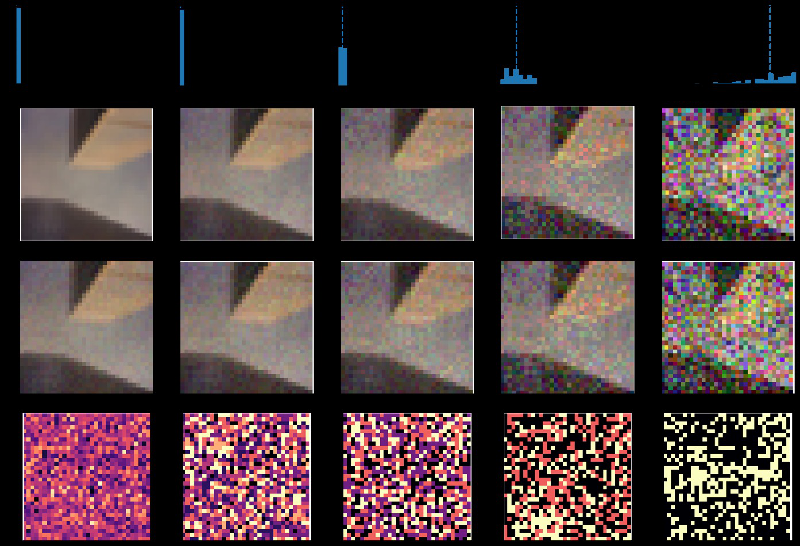
The new approach proposed in the research introduces a stochastic quantization encoding method. This method works by adjusting the randomness of the input image encoding through a quantization scale. In simpler terms, it lets you “tune” how much randomness is injected into the input signals of the SNNs. This method contrasts with traditional direct encoding, which provides static input values, and Poisson encoding, which introduces high randomness and often reduces the accuracy of clean image predictions.
How Does It Work?
The stochastic quantization encoding method allows for controlled levels of randomness in how pixel values from images are encoded into spike trains. By modifying the quantization scale (N), users can manipulate the amount of randomness—lower values lead to greater uncertainty and potential robustness against adversarial attacks but at the risk of cleaner accuracy. The proposed method maintains the core advantage of SNNs while offering a tailored approach to input encoding, increasing resilience without substantial sacrifices in performance.
Promising Results
Testing on widely used datasets like CIFAR-10 and CIFAR-100 exhibited noteworthy outcomes. The authors found that models using the newly proposed encoding method significantly improved in terms of adversarial robustness across various attacks compared to traditional encoding methods. For with VGG-11 models, using stochastic quantization encoding yielded a nearly 10% increase in robustness against adversarial perturbations. This trade-off reveals a bright avenue for further research and application in real-world scenarios where AI security is paramount.
The Future of SNNs
This cutting-edge work is not just a technical enhancement; it shifts our understanding of the fundamental ways we can train and deploy SNNs in various applications. Future research will likely explore further adaptations, potentially enabling SNNs to learn and adjust their encoding scale based on input conditions automatically, paving the way for even more intelligent systems capable of understanding and reacting to adversarial threats.
For those keen on AI safety and performance, Liu et al.’s Stochastic Quantization Encoding method represents a significant milestone in making spiking neural networks not only more robust to adversarial attacks but also more adaptable for practical applications.
Authors: Yujia Liu, Peiyu Liu, Yajing Zheng, Tiejun Huang


