
Revolutionizing Sustainable Investments: How AI is Empowering ESG-Adaptive Portfolio Management
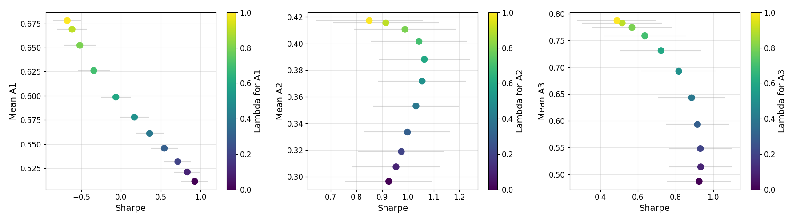
In an era where financial decisions are increasingly influenced by environmental, social, and governance (ESG) considerations, a groundbreaking research paper sheds light on the challenges faced by portfolio managers. Authored by Giovanni Dispoto, Marcello Restelli, and Carmine Ventre, this study proposes an innovative framework that integrates ESG preferences into reinforcement learning (RL)-based portfolio optimization, creating a more adaptive and sustainable investment strategy.
The ESG Challenge in Portfolio Management
Traditionally, portfolio management focused on maximizing returns while minimizing risks. However, with the rise of sustainable finance, investors are now required to incorporate ESG criteria into their decision-making processes. This poses a significant challenge: balancing financial performance with diverse ESG mandates that can vary considerably among rating agencies.
The researchers highlight a common pitfall in existing RL methods that typically optimize portfolios based on a single ESG provider. This approach overlooks the discrepancies between rating methodologies, leading to potential misalignment with investors' specific sustainability goals. Dispoto and his colleagues aim to tackle these limitations by framing ESG-aware portfolio optimization as a multi-objective reinforcement learning (MORL) problem.
A Novel Multi-Objective Approach
At the core of this paper is a model that integrates ratings from three distinct ESG agencies, allowing for a more nuanced approach to portfolio optimization. By employing a Preference Elicitation framework that uses Gaussian Processes, the model makes it easier for portfolio managers to express their preferences through simple pairwise comparisons of candidate portfolios. This minimizes the complexity often associated with manually balancing conflicting objectives.
Examining Influence from Regional Contexts
An intriguing aspect of the research involves simulating the decision-making of portfolio managers from various regional backgrounds using Large Language Models (LLMs). The empirical results revealed significant differences in how these simulated personas prioritize ESG alignment versus financial performance. For instance, European personas leaned heavily towards ESG-oriented strategies, often accepting reduced financial returns, while Texas-based personas favored risk-adjusted performance.
Empowering Portfolio Managers
The practical implications of this framework are profound. By allowing portfolio managers to actively participate in the optimization process through straightforward comparisons, the model effectively aligns algorithmic trading strategies with diverse human sustainability preferences. The adaptability of the proposed framework serves as a significant leap forward in merging traditional finance with pressing global sustainability goals.
Future Directions in ESG Portfolio Optimization
Looking ahead, the authors emphasize the need to integrate real-world ESG data, rather than relying on simulated ratings, to further enhance the system's robustness. Additionally, exploring non-linear methods to address the complexities of multi-objective optimization can lead to even more effective investment strategies that cater to a wide array of sustainability priorities.
This research not only enriches the field of finance but also encourages a more responsible approach to investing. As ESG considerations become central to determining investment viability, tools like the one proposed in this paper will undoubtedly play a pivotal role in shaping the future landscape of portfolio management.
Authors: {Giovanni Dispoto, Marcello Restelli, Carmine Ventre}




