
Revolutionizing Symbolic Regression: How Neural Networks and Sparse Modeling are Changing the Game
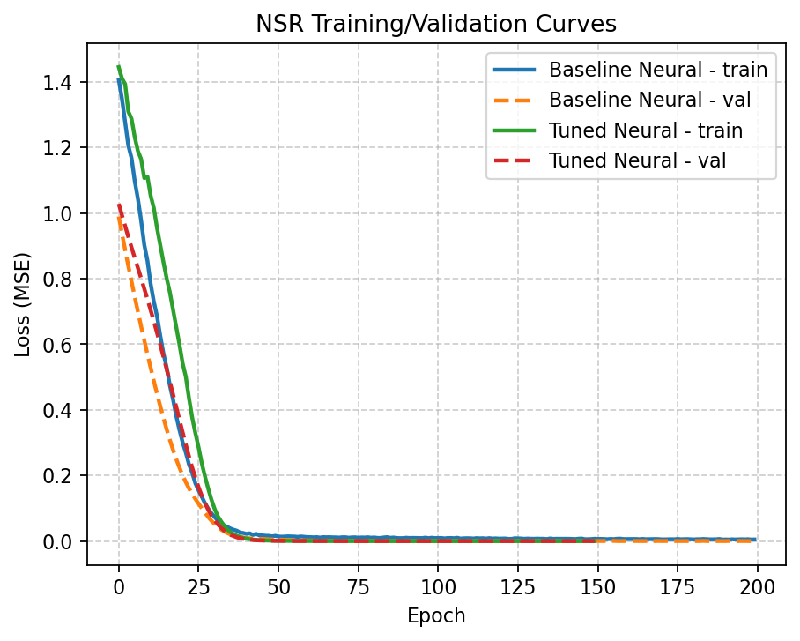
In the quest for generating interpretable mathematical models from data, researchers Ravi Kumar U and Sumitra have proposed a novel approach known as Neural Symbolic Regression (NSR). This framework combines the strengths of neural networks and sparse modeling, creating a unique method that not only seeks to predict outcomes but also unearths understandable mathematical expressions that can explain these predictions.
Understanding Symbolic Regression
Symbolic Regression is a form of machine learning that aims to find mathematical formulas that represent underlying patterns in data. Traditional methods such as Genetic Programming (GP) have faced significant challenges, particularly with scalability and noise sensitivity, which can adversely affect their performance in real-world datasets. The introduction of NSR promises to address these challenges effectively.
The NSR Framework: A Unique Approach
The NSR framework operates in a decoupled manner: first, a neural network approximates the target function in a robust and noise-resistant way, setting the stage for the next phase where sparse regression techniques—like LASSO—extract clear, interpretable equations from the data. This separation between approximation and symbolic extraction enhances stability and interpretability, a crucial aspect for scientists and engineers seeking to understand complex systems.
Key Innovations of the NSR Framework
1. **Decoupled Pipeline**: Unlike other hybrid approaches, NSR uses neural networks solely for function approximation, minimizing noise interference during symbolic extraction.
2. **Interaction-Aware Feature Library**: A newly designed library captures not just basic polynomial interactions but also pairwise terms, providing a richer set of features for analysis.
3. **Neural Preconditioning**: This method uses neural networks to preprocess data for sparse recovery, which enhances the identifiability of symbolic structures.
4. **Hyperparameter Optimization**: Implementing distributed hyperparameter tuning with Ray Tune and ASHA scheduling allows for optimal model selections and improved prediction accuracy.
5. **Comprehensive Empirical Evaluation**: The researchers conducted extensive experiments showing NSR consistently outperforms existing symbolic regression techniques, such as SINDy, across various benchmark datasets.
Results and Impact
The experiments conducted on the Nguyen benchmark suite indicate that NSR significantly reduces prediction error (as measured by RMSE), especially in noisy conditions. Furthermore, the symbolic expressions derived using NSR closely match the true underlying forms, offering not just predictions but also a deep understanding of the mechanisms driving the data.
Future Directions
The researchers suggest several avenues for future exploration, including adaptive feature libraries, transformer-based symbolic decoding, and improved stability in training. By refining NSR further, researchers aim to ensure its applicability across various real-world challenges, ranging from climate modeling to engineering systems.
Overall, the NSR framework provides a promising step forward in symbolic regression, striking a balance between interpretability and predictive power—an essential trait for advancing scientific discovery and technological innovation.
Authors: Ravi Kumar U, Sumitra




