Revolutionizing User Feedback: How FeedAide Transforms App Reporting into a Guided, Context-Aware Experience
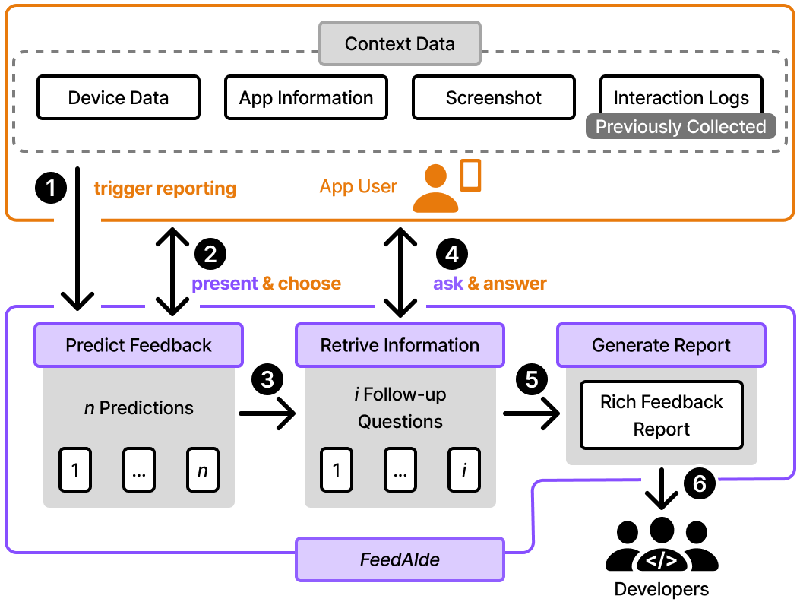
In today's tech-driven world, mobile apps thrive or die based on user feedback. Yet, many users struggle to articulate their issues clearly, leading to an information black hole sprinkled with vague reports, frustrating developers and users alike. A new research initiative from the University of Hamburg unveils a groundbreaking tool named FeedAide, designed to streamline this reporting process and enhance the quality of feedback.
The Problem with App Feedback
User feedback is crucial for app developers to understand user needs—whether to fix a bug or add a feature. However, studies reveal that around 45% of user feedback fails to provide essential details, leaving developers in the dark and often requiring time-consuming follow-up questions. Non-technical users typically submit brief, unclear reports that may contain just frustration rather than actionable data.
Enter FeedAide: A Game-Changer in User Feedback
FeedAide introduces an innovative approach to feedback reporting by integrating context-aware, interactive capabilities powered by Multimodal Large Language Models (MLLMs). This evolving technology uses real-time contextual data, such as screenshots and interaction logs, to guide users through the reporting process with personalized follow-up questions. The result? Comprehensive feedback reports that contain vital information developers can readily act upon.
How FeedAide Works
When a user triggers the feedback mechanism (for instance, a simple shake gesture on the device), FeedAide collects context-specific information like recent actions and captures screenshots. It then presents the user with tailored feedback options, like a prediction of the problem, and asks context-driven follow-up questions. For example, if a user is unable to log in, FeedAide might inquire if they recently changed their password, enhancing clarity and increasing the likelihood of effective bug resolution.
A User-Centric Evaluation
To measure the efficacy of FeedAide, researchers conducted a study among users of a gym's app, comparing their experiences using the traditional feedback form with the FeedAide system. The results were telling: users found FeedAide significantly easier and more helpful, reporting an increase in both the usability and quality of feedback submitted. Feedback reports created through FeedAide were notably richer, capturing comprehensive details that earlier versions failed to consider.
Industry Expert Validation
A separate evaluation by industry experts on the submissions affirmed FeedAide's effectiveness. Reports generated through the FeedAide system consistently outperformed traditional submissions, showcasing improvements in the clarity of described issues and the richness of context provided to developers. Consequently, the assessment confirmed that FeedAide not only improves user experience but also enhances developers' capability to derive actionable insights from feedback.
Future Directions for FeedAide
While FeedAide demonstrates remarkable potential, there is an ongoing discussion about privacy concerns associated with data handling during feedback collection. Future iterations of the tool aim to incorporate privacy-preserving innovations, ensuring users' sensitive information remains protected while still gaining valuable insights for developers.
The ultimate goal of FeedAide is to reduce the frustration of both users and developers, equipping them with the tools they need to communicate effectively and efficiently. As we advance further into an era of AI-enhanced user experiences, initiatives like FeedAide could pave the way for more meaningful interactions in mobile app ecosystems.
For app developers, adopting a solution like FeedAide could mean the difference between merely surviving in a competitive market and thriving by responding accurately to the needs and concerns of their users.
Authors: Ali Ebrahimi Pourasad, Meyssam Saghiri, Walid Maalej

