
Revolutionizing Vector Search: The Groundbreaking CwA Method Redefines Clustering Efficiency
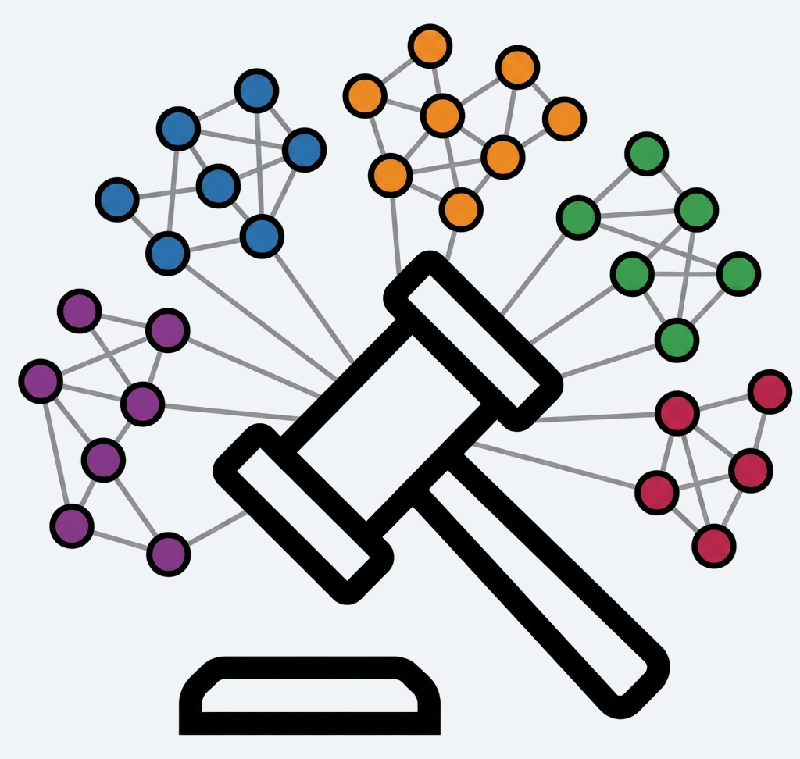
A new research paper titled "CwA (Cluster with Auctions): A Breakthrough in Vector Search Optimization," authored by Swann Bessa and colleagues from Meta FAIR, introduces an innovative approach to approximate nearest neighbor search. This method has the potential to significantly enhance search efficiency in high-dimensional data environments, which is crucial for applications such as image retrieval, recommendation systems, and large-scale data analytics.
Understanding the Challenge in Nearest Neighbor Search
Nearest neighbor search is a fundamental task in machine learning where you need to quickly find the closest points in a dataset relative to a given query point. Traditionally, this has been achieved through various clustering methods, which partition data into smaller clusters to facilitate faster searching. However, the conventional techniques often make poor assumptions about the distribution of both the queries and the data, leading to inefficiencies. This is where the CwA method aims to make a difference.
Introducing CwA: Merging Auctions with Clustering
The CwA method addresses the limitations of existing models by separating the roles of database partitioning and query probing functions. Instead of using a single model for both tasks, CwA utilizes a neural network to predict which clusters may have the nearest neighbors for any given query. Meanwhile, the data partitioning process is optimized through a combinatorial auction algorithm, which balances the size of database clusters during optimization.
How CwA Works: A Step-by-Step Look
CwA operates using an alternating optimization technique involving two main steps:
- Neural Network Training: The neural network is trained to predict which clusters contain the nearest neighbors for the queries, optimizing based on a balanced loss function.
- Auction Algorithm for Assignment: This step involves solving a capacitated linear assignment problem using an auction method to ensure that database vectors are efficiently distributed across clusters.
This alternating process continues until optimal performance is achieved, effectively creating a finely tuned database partition tailored specifically for the query distribution.
Astonishing Results: Performance Metrics
The authors reported impressive improvements over existing state-of-the-art methods. Specifically, CwA outperforms conventional algorithms such as K-Means and other neural approaches by achieving up to 4.7 times the throughput at equal recall levels. This means not only can It search faster, but it can do so without sacrificing accuracy, a critical balance that's often hard to achieve in machine learning tasks.
Implications for the Future
The implications of the CwA method extend far beyond simple speed improvements. By rethinking how queries and database vectors interact, this new method enables more efficient handling of vast datasets, which is increasingly vital in today’s data-driven environment. With the potential for applications ranging from enhancing search engines to improving machine learning models, CwA could revolutionize how we approach high-dimensional data search tasks.
Conclusion
In summary, the introduction of CwA signifies a noteworthy advancement in vector search methodologies, blending sophisticated neural networks with an innovative auction-based approach to clustering. As data continues to grow in size and complexity, strategies like CwA will be essential in ensuring that retrieval processes remain efficient and effective.
For those eager to dive deeper into the intricacies of this groundbreaking research, the original paper provides a comprehensive overview of CwA, its underlying principles, and its performance metrics compared to traditional methodologies.
Authors: Swann Bessa, Pierre Fernandez, Gergely Szilvasy, Matthijs Douze, Hervé Jégou




