
Revolutionizing Video Game Engines: How PROWBench Ensures Accurate Visual Representation of Programmable Worlds
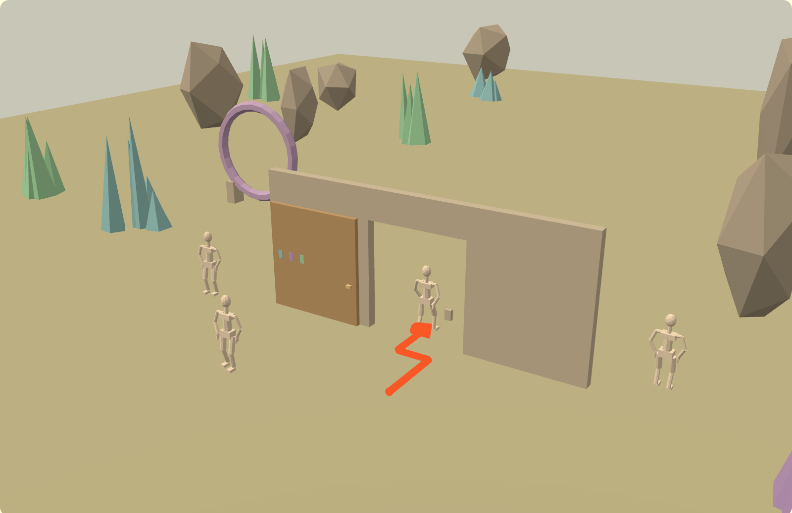
In a recent groundbreaking study, researchers have introduced PROWBench, a new benchmark designed to enhance the realism of video models in game engines. This innovation revolves around the crucial question: Can models accurately replicate programmed events in a virtual world? The findings promise to reshape how we evaluate interactive environments in gaming and simulation.
Understanding Programmable World Models
Programmable world models separate the visual representation from the dynamics of entities within a game, allowing for more control over how scenes are constructed and how interactions unfold. However, there has been a noticeable lack of assessments to ensure these models visually adhere to the rules specified by the program. PROWBench aims to bridge this gap.
The Structure of PROWBench
At its core, PROWBench consists of 170 carefully constructed episodes along with 600 video outputs showcasing varied scenarios and interactions. It meticulously logs entity states and timestamps of events, including those outside the camera's immediate view. This logging allows researchers to replay these programmed events accurately and verify whether the generated videos depict them correctly.
Accessibility and Expansion
One of the most impressive features of PROWBench is its extensibility. Researchers can construct their own scenes and behaviors, experimenting with different representations such as 3D models and bounding boxes. This flexibility encourages innovation in how virtual environments are created and interacted with.
Evaluating Video Generation Models
The benchmark assesses various aspects, such as entity control and long-horizon memory, determining how well models follow the programmed logic over time. Two key metrics introduced are Logic-Render Alignment, which evaluates whether each segment of the action timeline visually occurs as prescribed, and Interaction Success Rate, which checks if the events are visually realized within the expected timeline.
Surprising Results
Interestingly, the experiments revealed that even existing general-purpose video generation models, without any specific task training, perform remarkably well in following prescribed event trajectories. This suggests that there's a significant potential for enhancing the capabilities of current models simply by integrating better evaluative frameworks like PROWBench.
The Future of Game Development
The advancements highlighted by PROWBench emphasize the need for more rigorous benchmarks in digital environments. By focusing not only on visual quality but also on adherence to programmed logic and interactions, developers can create richer, more engaging gaming experiences. This innovation could lead to more dynamic narrative possibilities and immersive player experiences in the realm of video games and simulations.
In conclusion, PROWBench marks a pivotal step towards ensuring that programmable world models not only look good but also perform as intended, ultimately leading to a more realistic and interactive gaming landscape.
Authors: Zheng-Hui Huang, Guixu Lin, Yu-Ju Tsai, Jian-Kai Zhu, Fengbo Lan, Yu-Lun Liu, Yung-Yu Chuang, Kaipeng Zhang, Zhixiang Wang


