
Smarter Than Silicon: How AI is Redefining Post-Quantum Cryptographic Design
In an era where quantum technology poses a significant threat to data encryption, researchers are turning to innovative methods that harness the power of artificial intelligence (AI) to enhance security systems. A recent study conducted by Jungmin Park and colleagues tackles the critical challenge of developing robust post-quantum cryptographic hardware by integrating AI-assisted design methodologies.
The Challenge of Post-Quantum Cryptography
As quantum computers evolve, they threaten to break current encryption methods, necessitating a shift to post-quantum cryptography (PQC). This transition, however, is fraught with difficulties, particularly because once cryptographic hardware is deployed, it cannot be patched remotely. This research paper highlights a key issue with existing testing methods, which are unable to catch a range of defects inherent in lattice-based digital signature algorithms like ML-DSA.
AI’s Role in Enhancing Cryptographic Integrity
The study introduces a groundbreaking approach by addressing the limitations of the known-answer tests (KATs) currently used for validation. Instead of solely relying on KATs, the researchers implemented a new validation system that employs a "golden-reference oracle" combined with randomized stress tests. This innovative method produced a military-grade prioritized detection mechanism, ensuring that potential defects were identified, thereby solidifying the integrity of the cryptographic accelerator.
Examining the Results
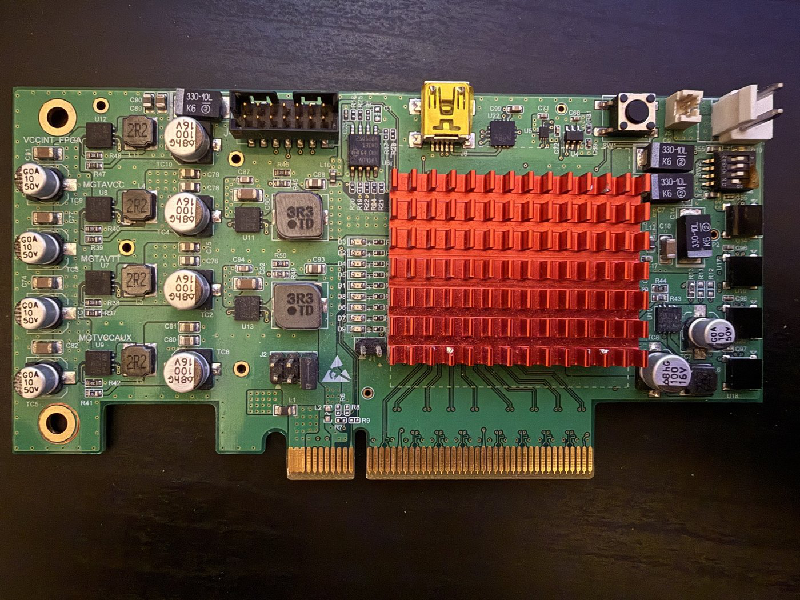
A notable achievement of this research was the successful creation of a unified ML-KEM and ML-DSA cryptographic accelerator, which was fully tested and verified under stringent conditions. The device, made operational on a Kintex-7 FPGA, boasted impressive operational metrics, including zero defects in over 779,000 checks during the adversarial soak tests, effectively demonstrating the robustness of both the design and validation methodology.
Bridging the Gap: AI-Driven Automation in Hardware Design
The deployment involved extensive data logging and analysis across 232 experiments covering various task categories—from design to verification—each illustrating the flexibility and scalability of AI-assisted design in hardware security. The results revealed that as tasks were more closely related to real hardware interaction, the accuracy of the AI's contributions declined, underlining the need for enhanced observability in design processes.
The Road Ahead: What This Means for the Future
This pioneering work not only demonstrates the potential for AI to significantly streamline and secure the design process for cryptographic hardware but also sets a precedent for future automation in hardware security design. With further validation of this framework, including multi-operator testing and improved key custody protocols, the integration of AI in cyber-security could well become the new standard—creating systems that not only survive but thrive in the quantum era.
The implications of this research extend beyond mere technological advancement; they contribute to the foundational effort in ensuring secure communication in a world where quantum computing may soon redefine digital trust. As we tread further into a digitized future, the fusion of cryptography and AI will likely pave the way for more resilient, intuitive security systems.
Research Authors
This insightful research was conducted by Jungmin Park, Eunha Kim, Wooseop Kim, Seongjoon Cho, and Byungho Cha, who collectively bring expertise from their respective fields to tackle one of the most pressing challenges in cybersecurity today.




