
STARS Aligns Spatial Cognition with Social Dynamics: A Breakthrough in Human-Robot Interaction
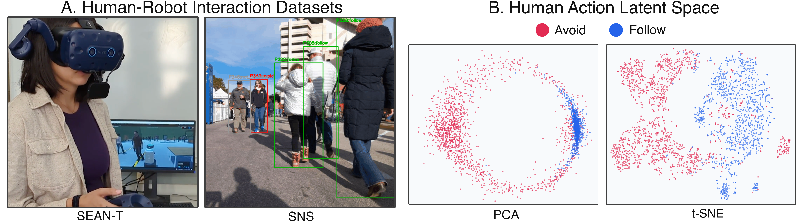
A groundbreaking advancement in human-robot interaction has been unveiled with the introduction of the STARS framework—SpatioTemporal Autoencoded Representations for Social-interaction. This novel approach aims to tackle the growing need for robots that can not only navigate physical spaces effortlessly but also engage socially and contextually with humans. Researchers from the University of Texas at Austin, led by Nathan Tsoi and Michael J. Munje, have succeeded in merging spatial and social perceptions into a cohesive framework capable of learning from limited data.
The Challenge of Human-Robot Interaction
Deploying robots in environments populated by humans is fraught with challenges, especially in understanding and predicting human behavior. Traditional robotics models have either excelled in spatial dynamics—like navigating through a crowd—or in social reasoning—like interpreting gestures or spoken instructions—but rarely have they effectively integrated both. This bifurcation has hindered the development of robots equipped with the social intelligence necessary for effective deployment in human-centric environments.
Introducing the STARS Framework
The STARS framework aims to bridge this gap by employing spatiotemporal graphs, which represent agents in an environment and their interactions over time. In essence, it treats the navigational elements as nodes in a graph and the interactions among these nodes as edges. This unique structure allows for a more nuanced understanding of social dynamics in various environments, maximizing the potential for learning from minimal data.
At the core of STARS is a self-supervised message-passing graph neural network autoencoder. This advanced architecture effectively compresses dynamic physical data into compact latent representations that encapsulate essential social semantics—without needing extensive labeled datasets for training. This capability significantly enhances the data efficiency of learning algorithms, enabling robust performance even in low-data scenarios.
Promising Results and Predictions
Through experiments with the SEAN Together dataset and the SocialNav-SUB benchmark, the STARS framework demonstrated impressive results. When compared with traditional unstructured models, it consistently outperformed in both pedestrian action classification and social scene understanding tasks. Notably, STARS exhibited remarkable data efficiency, achieving competitive performance levels even with minimal labeled training data—proving its capability to learn complex social behaviors and intents effectively.
Implications for the Future
The implications of this research extend beyond technical advancement; they highlight the potential for more socially aware robots that can navigate real-world environments seamlessly. Enhanced robots could not only protect public safety by avoiding collisions but also engage in more meaningful interactions with users, enhancing user experiences across various sectors—from hospitality to healthcare.
As researchers continue to refine the STARS framework, the next phase will focus on real-world applications and further refining its capacity to understand complex social dynamics in diverse settings. The groundwork laid by this study is poised to shape the trajectory of human-robot interaction, moving us closer to robots that truly understand and adapt to their human counterparts.
For more in-depth insights and code implementation details, visit the full research overview at STARS Overview.


