
T-Rex: A Giant Leap Towards Tactile-Aware Robot Dexterity
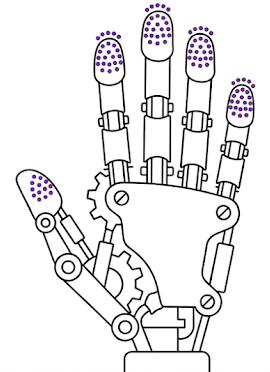
In the ever-evolving world of robotics, the newest player is T-Rex, a state-of-the-art framework that brings tactile-reactive dexterity to robotic hands. Unlike traditional robotic systems that often rely heavily on visual input, T-Rex integrates a profound understanding of touch, allowing it to perform complex manipulation tasks with enhanced precision and speed. This breakthrough could revolutionize the way robots interact with the physical world, enabling them to execute tasks that require delicate handling and responsiveness.
What Makes T-Rex Unique?
The backbone of T-Rex is a sophisticated architecture known as Mixture-of-Transformer-Experts (MoT). It is designed to process sensory information at different frequencies: while it uses a low-frequency system for general action planning, it relies on a high-frequency tactile system for real-time adjustments. This dual-structure is pivotal for adapting to the nuances of physical interactions, something that regular visual-only models struggle with.
At the core of the T-Rex framework is a massive dataset—over 100 hours of tactile-rich teleoperation data that captures various contact-rich actions with a wide range of everyday objects. This dataset is organized not just around specific tasks, but also includes a diverse array of motor primitives and real-world object interactions, providing a rich training ground for the model.
Challenges Addressed by T-Rex
One significant problem faced by modern robotic manipulation systems is the lack of comprehensive tactile feedback. Traditional learning approaches often fail to incorporate tactile modalities effectively due to the limited availability of diverse training data. T-Rex addresses this issue head-on by introducing a new mid-training phase that emphasizes tactile feedback without requiring extensive prior training specifically focused on touch. By utilizing a compact tactile encoder and strategies for efficient data collection, T-Rex demonstrates how tactile-reactive behaviors can be achieved with minimal initial demonstrations.
Performance Demonstrations
The T-Rex model excels in performing complex dexterous tasks that traditional robots find challenging. In experimental setups, T-Rex achieved a remarkable 30% higher success rate in executing tasks such as applying toothpaste, flipping pages, and handling fragile objects, compared to existing baseline models. This enhanced performance showcases not just its effectiveness in executing precise movements, but also its capability in managing dynamic interactions where tactile feedback is critical.
The Road Ahead
Despite its impressive capabilities, T-Rex is not without limitations. Issues such as object slipping, inaccurate positioning, and excessive force application during interactions were observed in testing scenarios. Such challenges underline the need for ongoing improvements in tactile sensitivity and precision control. Future developments may focus on integrating reinforcement learning techniques and enhancing sensor technology to push the boundaries of what these tactile-reactive models can achieve.
In summary, T-Rex stands as a significant advancement in robotics, paving the way for robots that can manipulate objects with a finesse akin to human hands. As research in this field continues, we may witness even more complex and capable robotic systems that seamlessly integrate touch and vision, bringing us closer to a future where robots can assist in everyday tasks with unprecedented dexterity and intelligence.
Authors: Dantong Niu, Zhuoyang Liu, Zekai Wang, Boning Shao, Zhao-Heng Yin, Anirudh Pai, Yuvan Sharma, Stefano Saravalle, Ruijie Zheng, Jing Wang, Ryan Punamiya, Mengda Xu, Yuqi Xie, Yunfan Jiang, Letian Fu, Konstantinos Kallidromitis, Matteo Gioia, Junyi Zhang, Jiaxin Ge, Haiwen Feng, Fabio Galasso, Wei Zhan, David M. Chan, Yutong Bai, Roei Herzig, Jiahui Lei, Fei-Fei Li, Ken Goldberg, Jitendra Malik, Pieter Abbeel, Yuke Zhu, Danfei Xu, Jim (Linxi) Fan, Trevor Darrell




