
Transforming Financial News Analysis: How AI is Revolutionizing Sentiment Measurement
In a world where timely information is vital for economic decision-making, understanding sentiment in financial news is more important than ever. Researchers from prestigious institutions, including the University of Pisa and the European Central Bank, have introduced a groundbreaking approach to sentiment analysis using transformer-based language models. This innovative framework significantly enhances the measurement of sentiment from news articles compared to traditional dictionary-based methods.
Rethinking Sentiment Analysis
Historically, sentiment analysis in the financial sector relied heavily on dictionary-based indicators, which primarily counted positive and negative words without fully capturing the context in which they were used. This often led to misinterpretations, especially in complex financial statements where nuances play a critical role. The research team's new methodology employs advanced transformer-based models, particularly FinBERT, to classify sentiment on a sentence-by-sentence basis, allowing for a deeper understanding of the context that shapes financial narratives.
The Methodology: A Game Changer
The study evaluated over 143,000 financial news articles, classifying their sentiment and aggregating results into daily mood indices. This transformed approach allows for an accurate representation of the overall sentiment conveyed in financial reports and can adjust for factors like neutrality and text length. By employing human evaluations as a benchmark, the researchers ensured that their automated sentiment measures aligned closely with how individuals perceive sentiment in these articles.
Automated vs. Manual: The Validation Process
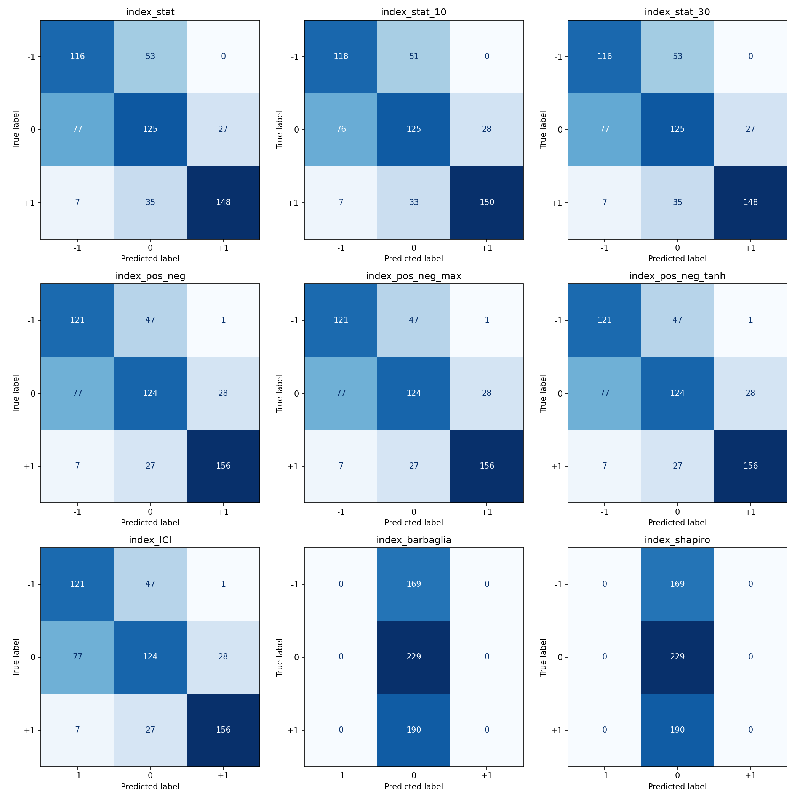
To measure the effectiveness of their new sentiment indices, the authors conducted a large-scale validation exercise involving 444 participants who rated nearly 600 financial articles. The results revealed that the transformer-based sentiment measures were far more consistent and accurate compared to traditional dictionary-based approaches. For instance, while both methods captured general sentiments, the richer contextual insights provided by the transformer models significantly reduced errors in distinguishing between positive and negative tones.
Implications for Economic Forecasting
The implications of this research extend beyond mere academic curiosity. The newly developed sentiment indices can be integrated into economic forecasting models, providing policymakers and investors with real-time insights into market sentiment. The researchers believe that these advancements will improve the accuracy of economic indicators and projections, particularly when regulatory bodies and investors need quick, reliable data in dynamic markets.
Conclusion: Embracing the Future of Sentiment Measurement
This research marks a significant leap forward in the field of sentiment analysis, setting the stage for more nuanced and actionable financial insights. By harnessing the power of AI and contextual understanding, analysts can now create more reliable sentiment indicators that provide a clearer picture of the economic landscape. As the field continues to evolve, this approach promises to transform how financial news is interpreted and acted upon, ultimately benefiting stakeholders across the global economy.
For more information or to access the full study, contact author Caterina Giannetti at caterina.giannetti@unipi.it.




